
Annie Dillard 1945-2026
The Wrong Angle
Annie Dillard died on Tuesday at her home in South Wellfleet, Massachusetts, in a house that looks out over a cove. She was 81. I read a couple of obituaries in the New York Times and The Atlantic and NPR and they all reach for the same things: the Pulitzer Prize she won at twenty-eight, the Thoreau comparison that followed her forever after, and the frog. If you've never read Pilgrim at Tinker Creek, you don't know the frog I'm talking about. A few pages into the book, Annie watches a small green frog at the edge of the creek get seized from below by a giant water bug, whose bite dissolves the animal's insides. She describes, in vivid unflinching detail, the frog's skin emptying and collapsing as it's drunk. It's perhaps the most anthologized passage she ever wrote, and it's the one the obituaries reach for because it's one of those great vignettes that is the whole book in a paragraph: creation is lavish and creation is horrifying and in the book that follows the author is going to look at both. I'm going to try to reach for something else, because the frog has been well taken care of and because the thing I want to say about her is a thing about me first.
I came to Pilgrim at Tinker Creek because I loved nature writing. Or I thought I loved nature writing, which, it turns out, aren't precisely the same thing. What I actually loved was Edward Abbey. Freshman or sophomore year of high school I pulled The Monkey Wrench Gang down from my dad's bookshelf, and then went back for Desert Solitaire, and then borrowed or bought the rest: The Journey Home, Black Sun, The Fool's Progress, Hayduke Lives!, until there wasn't any Abbey left. Desert Solitaire remains one of my favorite books, on the short list of books that you have to understand to understand me. Monkey Wrench had done something more dangerous, which was to make me feel that a person who loved a place had an obligation to do something about it. By senior year I had suffered through Walden, the way you suffer through a required text, and come out with the merit badge: I had read Thoreau. I was versed. I knew, I assumed in the way a young man arrogantly assumes he knows, what the genre of "nature writing" was and what it was for.
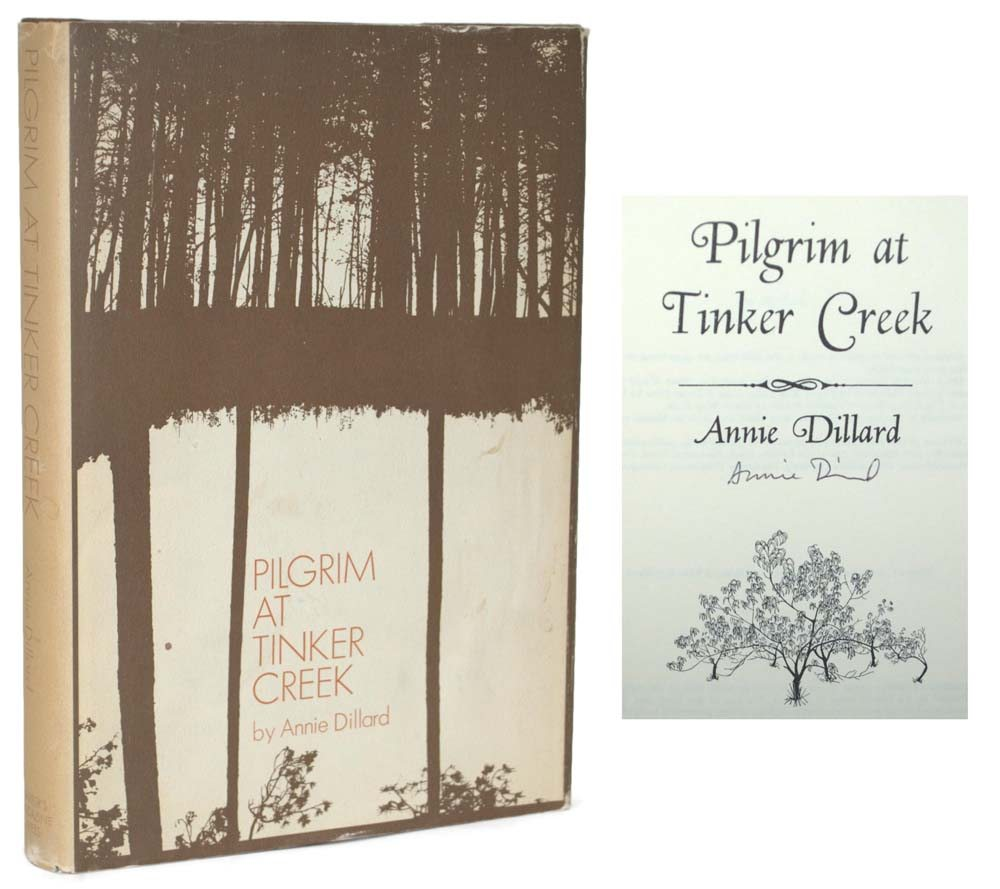
So when I got to Dillard, still in high school, I was expecting another book in that line. A woman in the woods, a year at a creek, a creed. What I got was a book that never told me what to do, never told me what was wrong with the world, never really mentioned the world. It was released in 1974, but there was no Vietnam. No Watergate. No Nixon. No enemy. Just a woman looking at things, some of them beautiful and some of them horrible, and refusing to draw a conclusion I could take home and use.
I finished it. I put it down. I don't remember exactly what I thought other than failing to be as impressed as I felt I needed to be with a Pulitzer Prize winning book. I was angry, at the time, with all of the threats I felt nature faced, and this book wasn't angry. It didn't shake its fist at the sky. It didn't draw a line in the sand. It didn't threaten to blow up a God Damn Dam. More than anything, I was underwhelmed.
Here's the thing I didn't know, and couldn't have, because it wasn't the story being told about her. It wasn't in the context I was receiving the book into.
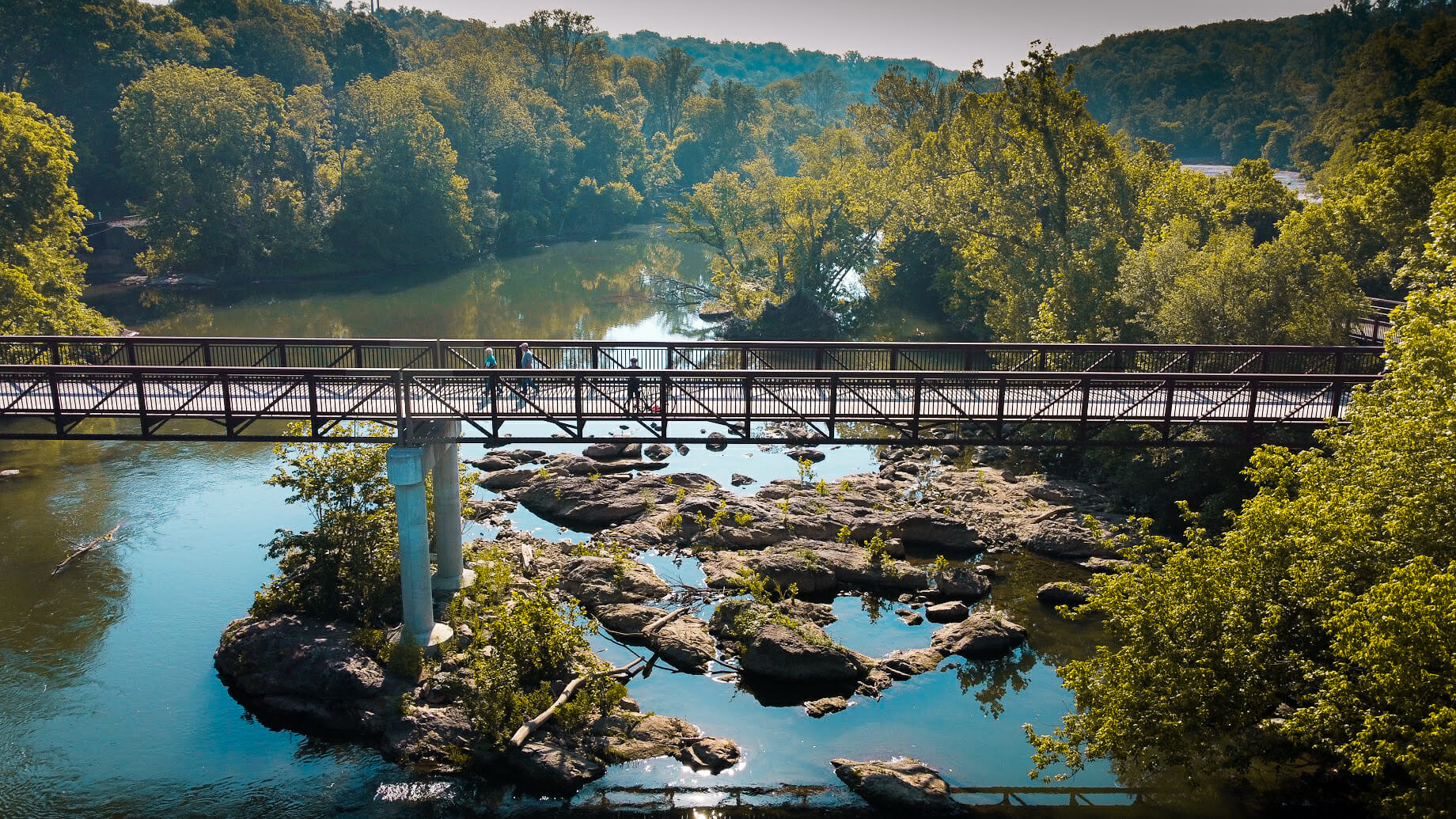
She wasn't in the wilderness. Tinker Creek was her neighborhood. The obituaries are careful to note that she was a day-tripper: she walked out into the Roanoke Valley in the morning and came home in the evening to a suburban house and a husband who taught creative writing at Hollins. There was no cabin. No season of solitude. Nothing that would have satisfied Abbey, who needed the desert to be empty of everyone but him, or Thoreau, who needed the pond to be a proof. Dillard needed neither, because the creek was never the subject. She said so, repeatedly, to anyone who would listen. She wasn't a nature writer. She was a theologian looking for God, and the creek was just the closest place to look.
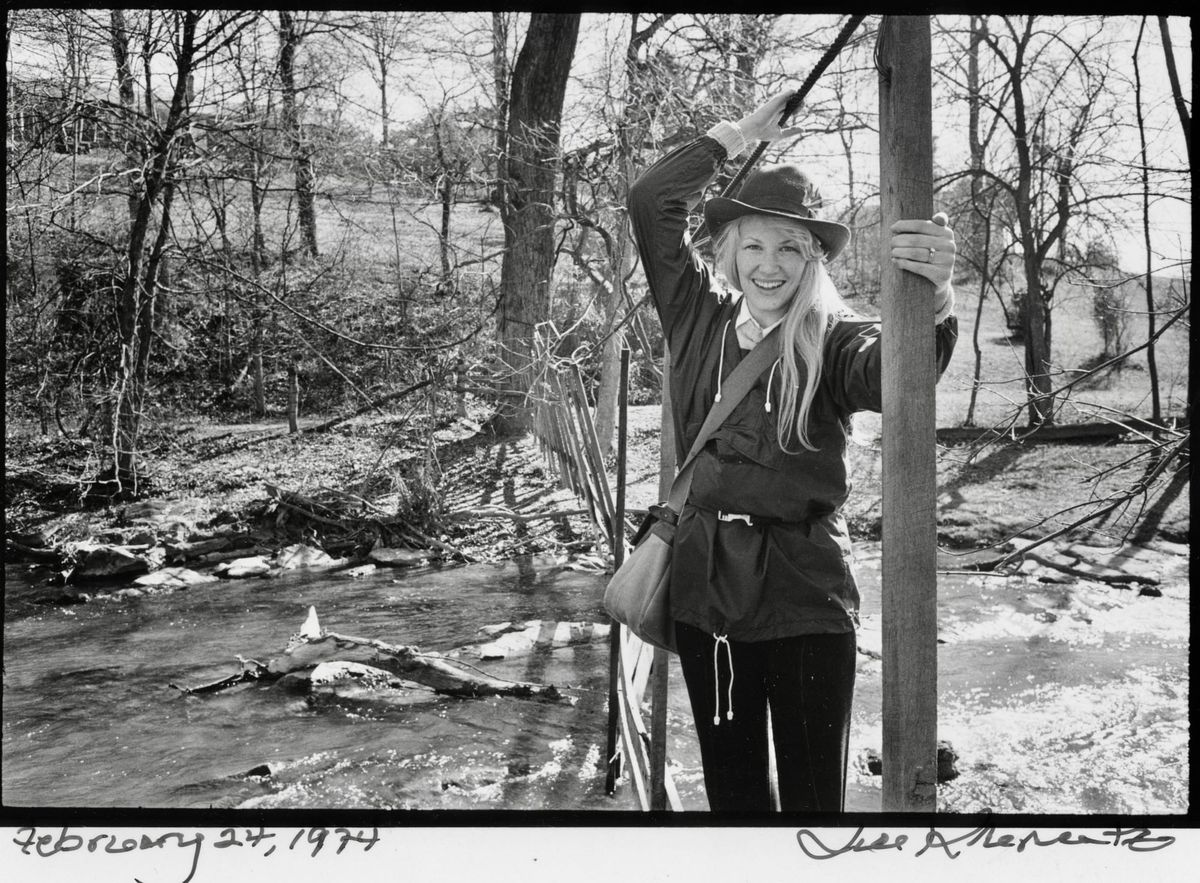
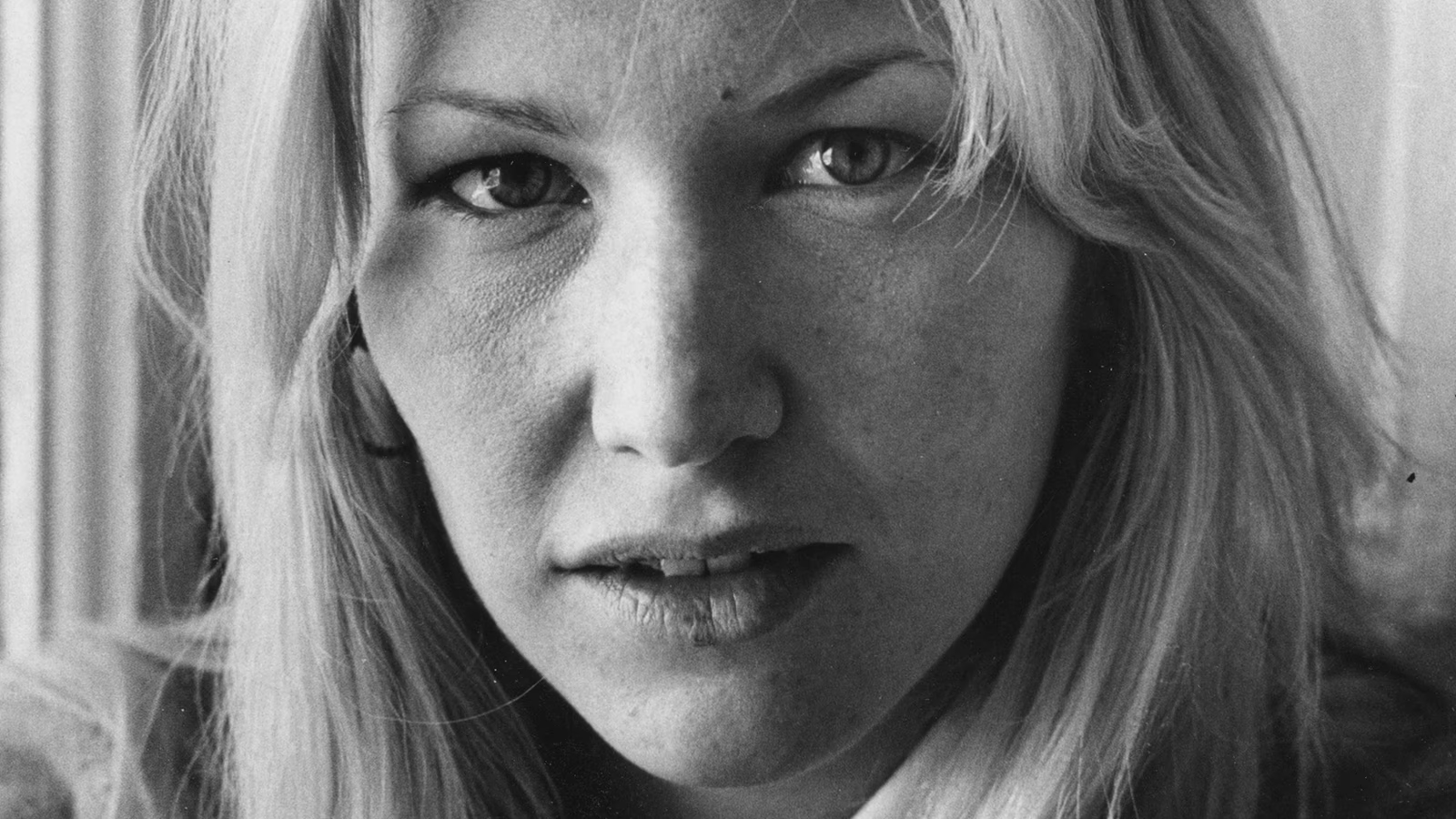
Nobody listened. Contemporary reviewers filed her under Walden immediately. The press ran her photograph as often as her sentences and somebody coined the phrase "Cheesecake at Tinker Creek." She left Virginia and went to Washington State partly to get away from all of it, and wrote Holy the Firm in a one-room house with a cat and a spider, and the first thing she tells you in that book is that nothing is going to happen in it.
So the misreading I was suffering through wasn't mine alone. It was popular culture's, handed to me pre-assembled. I approached her from the wrong angle because the wrong angle was the only one on offer. That doesn't get me off the hook. It just means the hook I was on was bigger than I was.
I went back because of a friend. Sometime around 2019, my friend DC mentioned, in passing, how much she loved Annie Dillard's writing, and I said the thing you say. Oh yeah, I remember reading Tinker Creek back in high school. Which was true, and which was also, I realized as she kept talking, a way of filing the book under handled. She wasn't describing a book or an author she had handled. She was describing something that had stayed with her, and the gap between the way she talked about it and the way I remembered summarily dismissing it was wide enough that I couldn't pretend not to see it. It wasn't that I'd disliked the book. It was that I had massively underappreciated it, and had been comfortable doing so for twenty-some years, and a person I trusted had just told me, without judgement or reproach, that I'd missed something. Something worthwhile.
So I read it again. Annie's words were the same. The reader was different.
I liked the frog as much as anyone who read Pilgrim. But it was the title essay from Teaching a Stone to Talk, about a man she knew who kept a stone on a shelf under a square of leather and took the cover off, at intervals, to give the stone its lessons. He was trying to teach it to speak. Dillard doesn't mock him. She says it's noble work. And then she widens the frame until you realize the man with the stone is everyone who has ever stood in a landscape and waited for it to say something back. In every cathedral and every physics lab. All of us, calling God back to the mountain, or failing that, hoping to get a peep out of anything, anything at all, anything out there that that isn't us.
And of course the stone never talks. Never responds. That's not the failure of the essay. That's the point of it. Nature's silence, she writes, is its one remark. And the honest response to that silence isn't a manifesto. It's attention. You stand there. You keep standing there. You take the silence as an answer and you pray to it anyway.
That was the thing I'd been unable to grok the first time. I wanted the book to argue. To fight. She was doing something harder than fighting or arguing. She was looking, reporting what she saw, and declining to pretend that the looking added up to a position. Once I understood that, it was like that one Far Side comic. I'd been leaning forward, pushing on a door that needed to be pulled to be opened. And once the door was opened, I got it. I got the book. I got the author. And once you get her, she gets you. Permanently. You can't unread her, and you can't quite look at a creek the same way again.
Eudora Welty, reviewing Pilgrim when it was released back in 1974, observed that Dillard was the only person in her own book, substantially the only person in her world. Forty-odd years later William Deresiewicz went further in The Atlantic, and said the alternative she represented smacked of spiritual snobbery: a mystical way of life available to the few who could afford it, like, say, the daughter of a wealthy Pittsburgh family who was famous before thirty. The Times, in its obituary, notes that she took heat for borrowing the opening scene of Pilgrim, the tomcat and the blood, from a graduate student, in a book sold as nonfiction.
These are real. I'm not going to wave them away. But I notice that all of them are versions of my teenage objection with better vocabulary: she should have been more like Abbey. She should have had other people in the book. She should have had a politics. She should have earned the solitude by suffering for it. And I think the answer, in the end, is the same answer, which is that she wasn't trying to do the thing they wanted, and the thing she was trying to do, she did better than anyone. The solitude isn't a moral claim about how to live. It's a technical condition for seeing. You don't need company to watch a moth burn in a candle. Company would only make you look away.
In Holy the Firm, Dillard tells a story about a classroom. She asks her students which of them want to give their lives to writing. All the hands go up, and she has a small parenthetical panic on the page about whether they mean it. And then she tries to tell them what that choice costs. You can't be anything else, she says. You must go at your life with a broadax.
I've thought about that line more since then than I've thought about the frog or the stone. It's not advice about craft. It's advice about consumption. The trees you cut down are your own: your time, your years, your evenings, the parts of your life that would have been perfectly pleasant left standing. You fell them and you mill them and you build the thing out of the lumber, until the thing is the only evidence that the trees were ever there. She told an interviewer once that writing about something destroys the memory of it. You're left only with the memory of what you wrote. She wasn't complaining, I don't think. She was just describing what it is to write.
I'm at a point in my life where I need reminding of that. That the writing isn't something I do alongside the life, some pastime that exists cozily next to everything else I am. It's something I make out of it, and the making uses it up, and that's not a cost to be minimized. That's the job. That's writing. That's being a writer.
Annie Dillard stopped publishing after The Maytrees in 2007. Her website said she could no longer travel, couldn't meet strangers, couldn't sign books. She spent the last years on the Cape, painting watercolors, looking at the cove. I like to think she'd finished going at her life with the broadax and was simply, for once, standing still in front of a body of water and just being there. Listening to the silence.
I read her wrong the first time. I read her wrong because I'd been told what she was, and what she was didn't match what I'd been told. It took a second reading, and a friend, to find out the label was the problem and not the book. That's a small story. But it's the one I have, and she spent her whole life insisting that the small thing seen clearly was worth more than the large thing assumed.
Tinker Creek is still there. The silence is still its one remark. She was right about that.