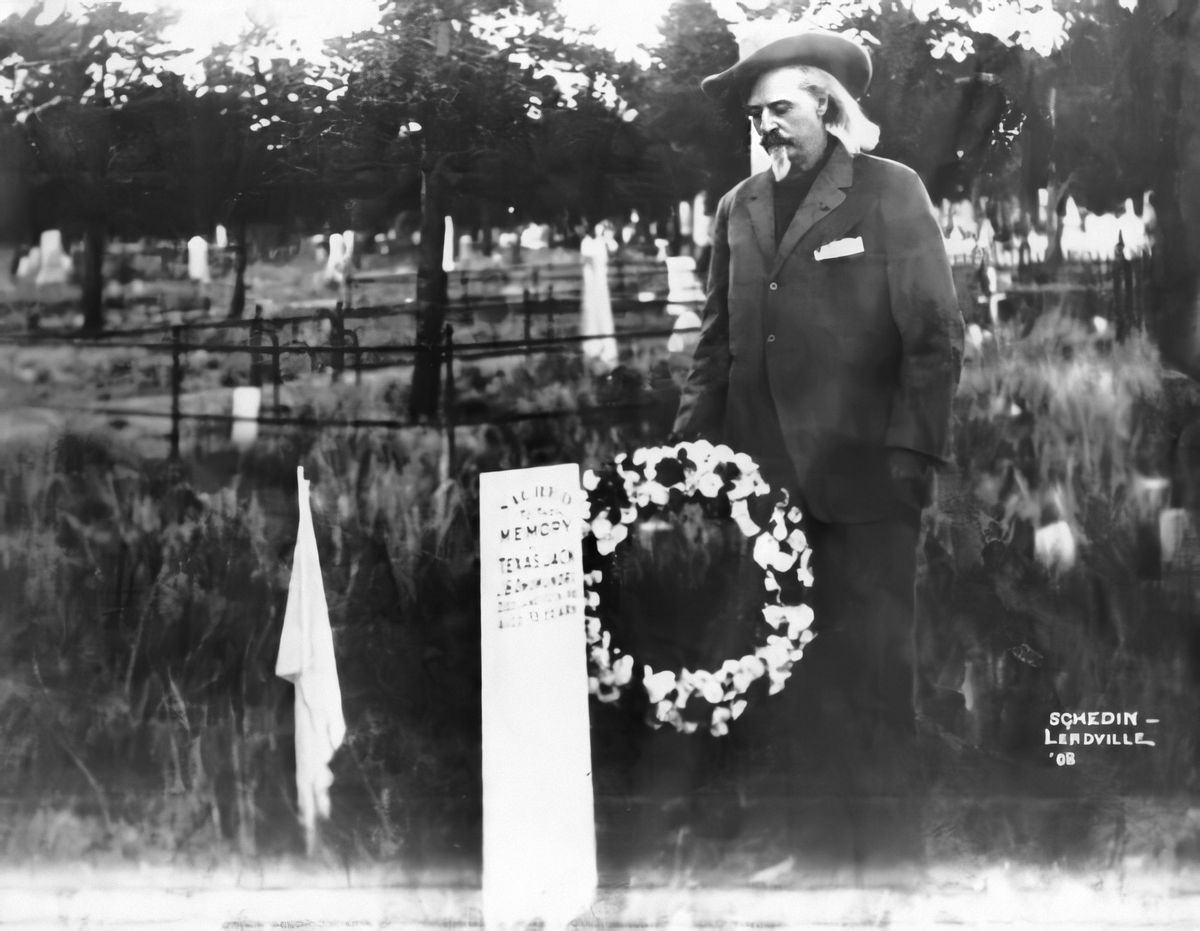
Buffalo Bill at the grave of Texas Jack
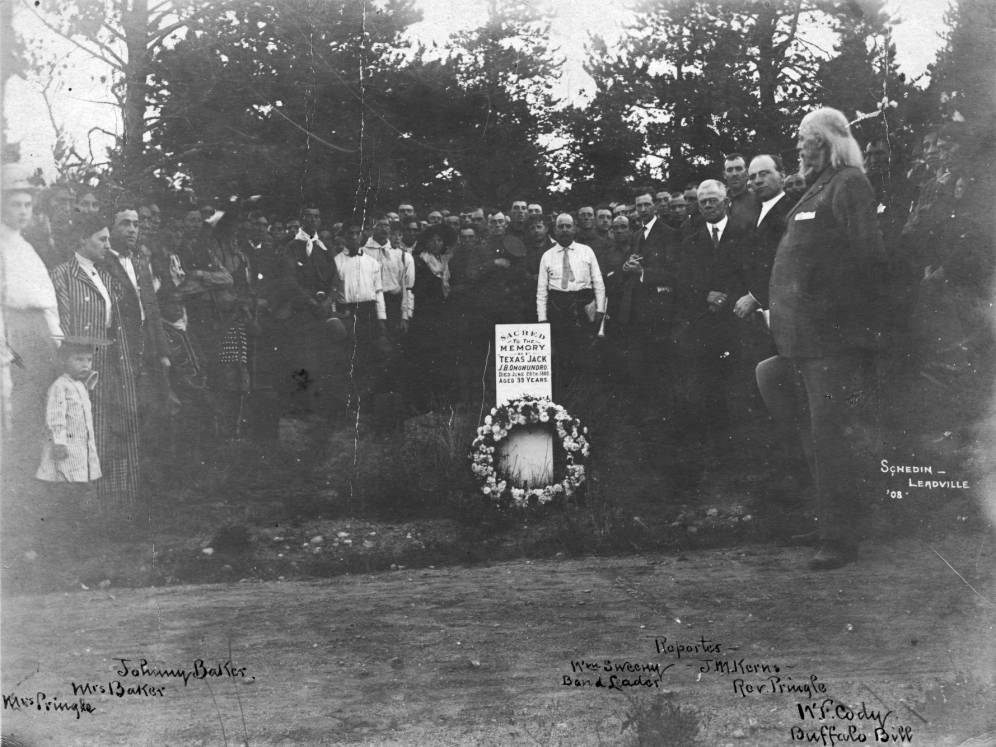
115 years ago, on September 5, 1908, Buffalo Bill Cody visited the grave of his best friend Texas Jack Omohundro in Leadville, Colorado.
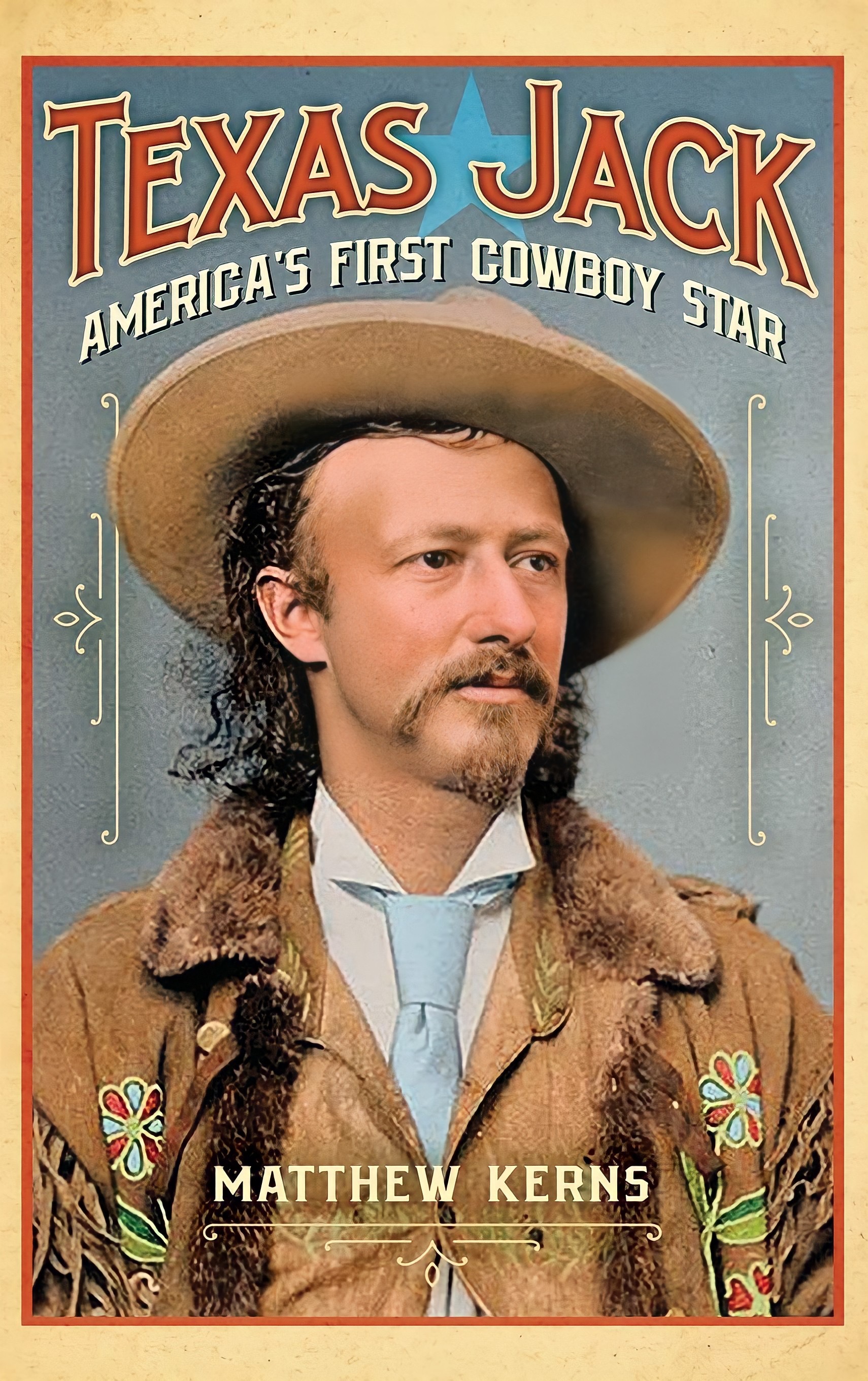
From my book, Texas Jack: America's First Cowboy Star:
Buffalo Bill biographer Louis Warren points out that “William Cody seldom spoke of death, or of people who had died. In all his correspondence there is barely a mention of any deceased friends or acquaintances. He wrote no poignant words about Wild Bill Hickok, Sitting Bull, or Nate Salsbury. No matter how tragic their deaths, he seldom spoke of the loss.” The exception to this rule is Texas Jack, John B. Omohundro. On September 5, 1908, twenty-eight years after Texas Jack’s death in Leadville, Colorado, the loss still weighed heavy on Cody’s mind. That evening, Cody assembled the entire cast of Buffalo Bill’s Wild West at the grave of his cowboy friend.
With the sun setting behind 14,000-foot Mount Massive, Cody and his Wild West troupe gathered under the tall pines of Evergreen Cemetery in Leadville to pay tribute to Texas Jack. A reporter for the local Herald Democrat wrote “If the spirit of Texas Jack were able to hover over the little mound that contains his mortal remains he would have been gratified by the ceremonies in honor of his memory. They were the kind of ceremonies that his plain, rough, honest character would have asked for, could he have chosen—brief, simple, and unaffected, but oh, how impressive!” A reverend offered a prayer, and Cody stepped forward to say a few words about his friend.
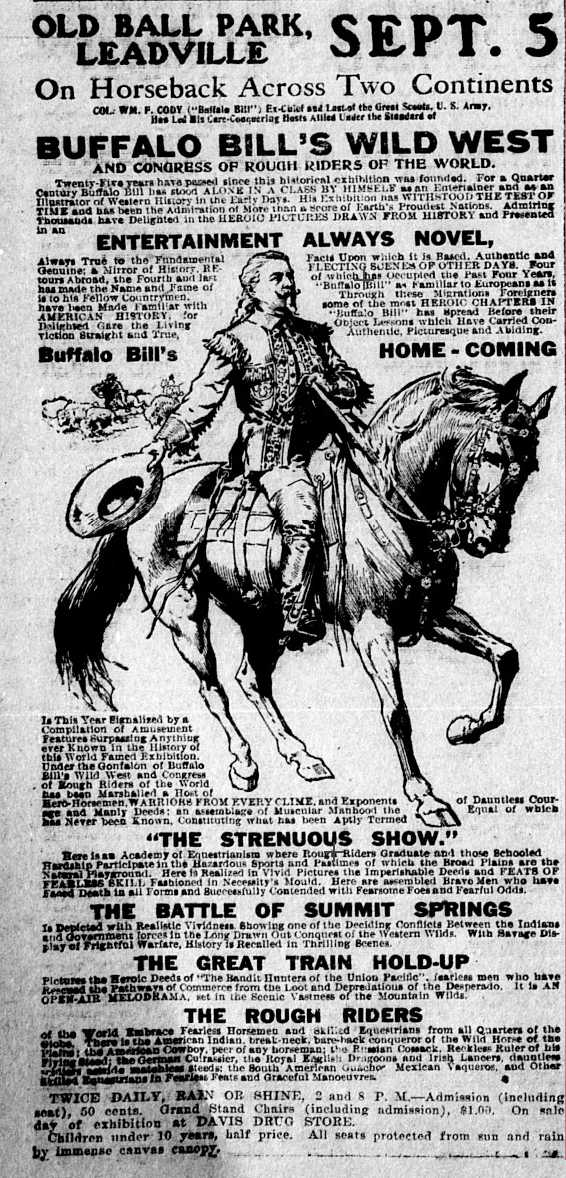
Picture the scene: The silver-haired showman stands next to the pine slab marking his old partner’s final resting place. Around him are hundreds of Leadville locals, and next to him stands the reverend who conducted the service and the professor who led the brass band at Omohundro’s funeral procession twenty-eight years earlier. Members of Cody’s Wild West show stand arrayed in their costumes. A dozen cavalrymen form a rough semicircle. Some of these men, like their leader Buffalo Bill, served the Union during the Civil War, fighting on the opposite side of the battlefield from the former Confederate soldier they now commemorated. Representatives of the Ute and Sioux tribes, also part of Cody’s entourage, stand tall in war paint and feather headdresses as they listen to words spoken about a man who claimed Powhatan lineage, hunted with the Pawnee, and fought against Comanche, Sioux, Nez Perce, and Cheyenne. Russian Cossack hunters, Japanese warriors, British cavalry, Arab riders, and German horsemen, each in full show garb, have come to pay their respects.
A report in the local newspaper captures best the largest constituent group of men gathered for the ceremony. “Impressed by the ceremony second only to Col. Cody himself was the crowd of cowboys, whose experiences on the plains have been similar to those of the dead friend of their present-day chieftain. These men felt that the old scout was one of them. To them, the service was of greater import than to those whose life had been spent in some other pursuit. Tears welled in the eyes of many of these strong-muscled, large-hearted men. It was one of their comrades whom they were honoring, a man whom they knew and whose life was their life, though they had never seen him.”
Here, then, are the cowboys of the Wild West, come to honor one of their own, the first of their kind. These men shared with Texas Jack the common bond of the trail: hours spent breathing the dust of the herd, nights filled with stories shared by campfire and invented verse sung to restless doggies, tedious days and weeks broken only by the adrenaline rush of high river crossing, murderous rustler, and deadly stampede. Here stood the second generation of cowboy stars, held dear in American hearts as the rescuers of embattled settlers and the embodiment of the frontier man, acknowledging the first of their kind.
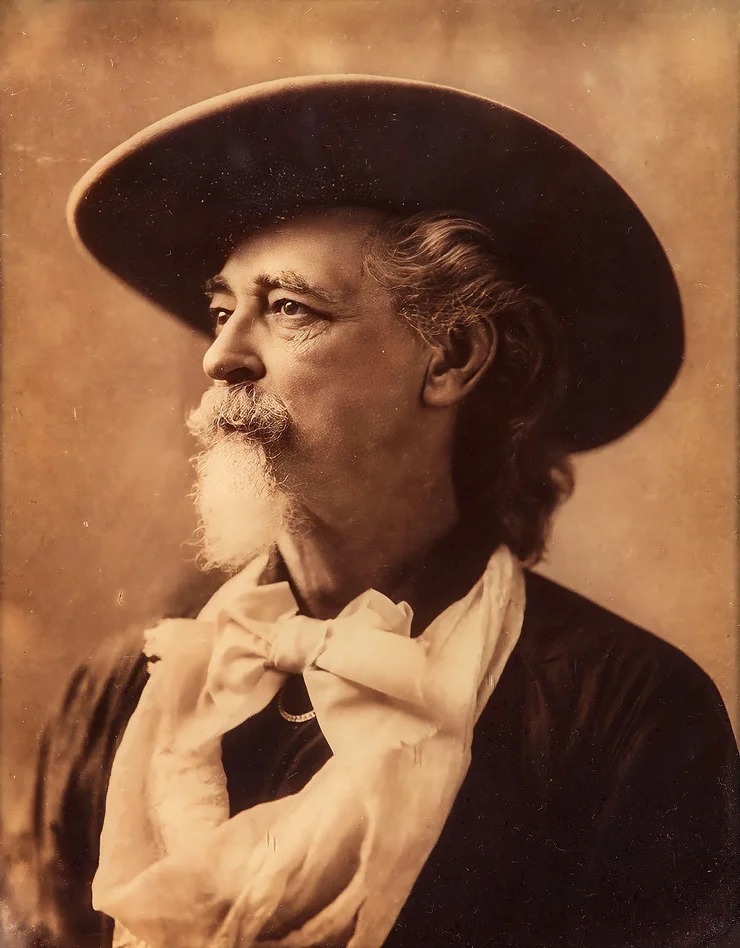
Cody removes his ever-present wide-brimmed Stetson, his famous locks now silvered and significantly thinned with age. He clutches the hat before him and begins to speak:
"My friends, perhaps many of you do not know this man whom we have gathered to honor. No doubt you would like to know something of him, who was one of my dearest and most intimate friends.
John B. Omohundro, better known as Texas Jack, was a Virginian by birth. The blood of the Powhatan Indians flowed in his veins. He was of proud and noble birth.
During the Civil War, he was a member of the cavalry command under Col. “Jeb” Stuart of the Confederate Army. He was one of his most trusted and faithful scouts and performed almost invaluable service for him.
After the war, he drifted westward and located in Texas, where he took up the hazardous work of a cowboy. He was one of the original Texas cowboys when life on the plains was a hardship and a trying duty.
When they began to drive the cattle to the northern country, he engaged in that occupation, following the herds northward, and returning after each trip for another herd.
Finally, he located at North Platte, Nebraska. It was there that I first met him. He was an expert trailer and scout. I soon recognized this and tried to secure his appointment in United States service. But the authorities were unwilling to hire discharged Confederate scouts, so I had to take the matter to the Secretary of War. After much persuasion, I was given permission to hire him."
Here Cody’s voice breaks.
"In this capacity, I learned to know him and to respect his bravery and ability. He was a whole-souled, brave, generous, good-hearted man.
Later he and I went East to go into the show business. He was the first to do a lasso act upon the stage.
After a short career with the show we again went West. That was in 1876 when the Sioux War was being fought. About the same time, General Custer was killed and we had to take part in many important engagements. After the Indian Wars, we returned East and again went on the stage. It was during tours of the large cities that he met and married Mademoiselle Morlacchi, the famous dancer, who later traveled with him.
After I left him, he and she continued to travel. They came to Leadville, where she was engaged as a performer. Becoming attached to the place, my friend and his wife remained for a while.
It was while here that he was stricken with pneumonia, which was then prevalent. He succumbed and was buried here under this mound by his many friends.
Among those who contributed to the ceremony at that time was Mr. Kerns, who is here now, and who remembers the manly traits of poor Jack."
Cody pauses to gather himself before continuing.
"Jack was an old friend of mine and a good one. Instead of this board which now marks his grave, we will soon have erected a more substantial monument, one more worthy of a brave and good man."
Cody’s eyes follow the sweep of his hand past the board, beyond the pine trees, and toward Mount Massive towering in the fading orange sunset. A slight breeze plays through the tops of the trees as they cast long shadows over the assembled party. Cody takes a moment to wipe his brimming eyes with his handkerchief. He looks out over the assembled citizens of Leadville and then to the cast of his Wild West show, the dozens of Native Americans, soldiers, scouts, and cowboys who are employees, cast members, and friends. He places a hand on the grave marker he means to replace and returns the Stetson once again to his head.
"May he rest in peace. "
As the band plays “Nearer My God to Thee,” Cody places a wreath of flowers on the grave of his old friend. He mumbles a few brief words of his own before mounting his horse and riding away.
Nearly a decade later, on January 6, 1917, Buffalo Bill rode through Leadville for the final time on a return visit from Glenwood Springs to Denver. Too weak to leave his train car, he sat up in bed when informed he was in Leadville, telling his daughter about the grave of Texas Jack, his friend and partner. Four days later, Buffalo Bill was dead.
__________________
Texas Jack: America's First Cowboy Star by Matthew Kerns, is available at:
Amazon - https://amzn.to/3ZeC53b
First edition copies, personally signed and inscribed by the author, are available at:
https://www.dimelibrary.com/shop