Doctor Who Knows?
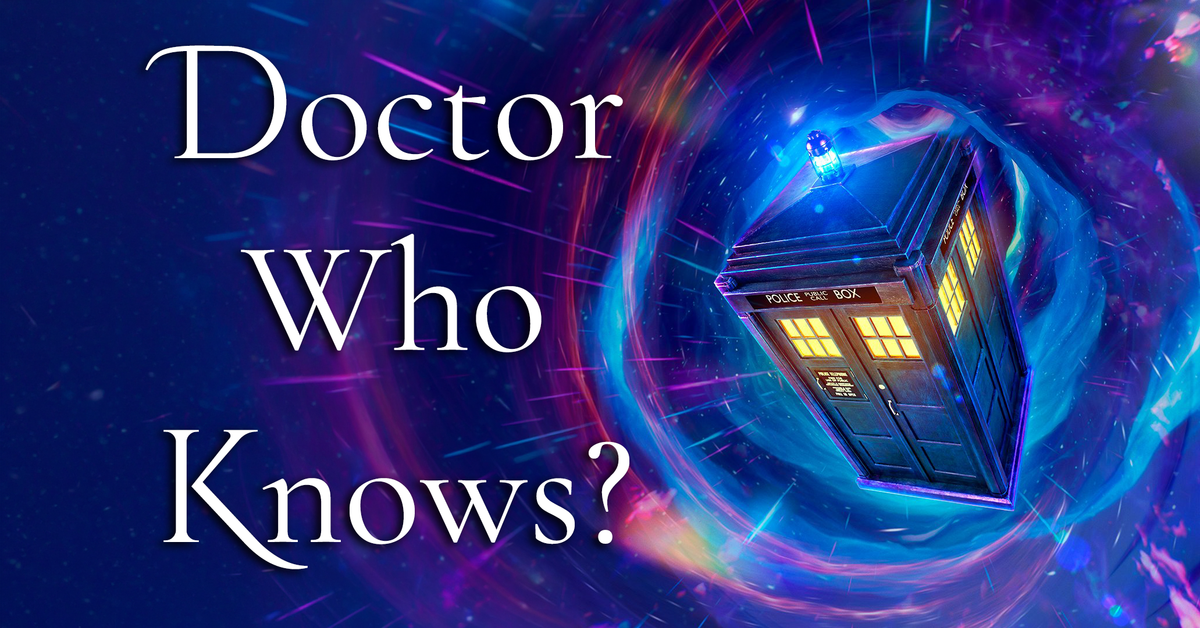
Today the BBC announced that Doctor Who is going out to "competitive tender."
The phrase is working hard. It means independent companies will be invited to pitch for the right to make the show "on a work-for-hire basis," which means nobody is currently making it, which means, and this is the part the release might prefer you not assemble yourself, the show has no Doctor, no showrunner, no production company, and as of this morning no Christmas special. Russell T Davies and Bad Wolf are gone. The last series drew the lowest ratings in the franchise's sixty-three-year history; the finale pulled 3.44 million. Nobody used the word that fits, because the word that fits is cancelled, and you don't cancel a national treasure. You put it out to tender.
Today we’re announcing an update on plans for the future of Doctor Who
— BBC Press Office (@bbcpress) June 10, 2026
Get all the info ➡️ https://t.co/o6nK2BwIew pic.twitter.com/IIMN6AkQkn
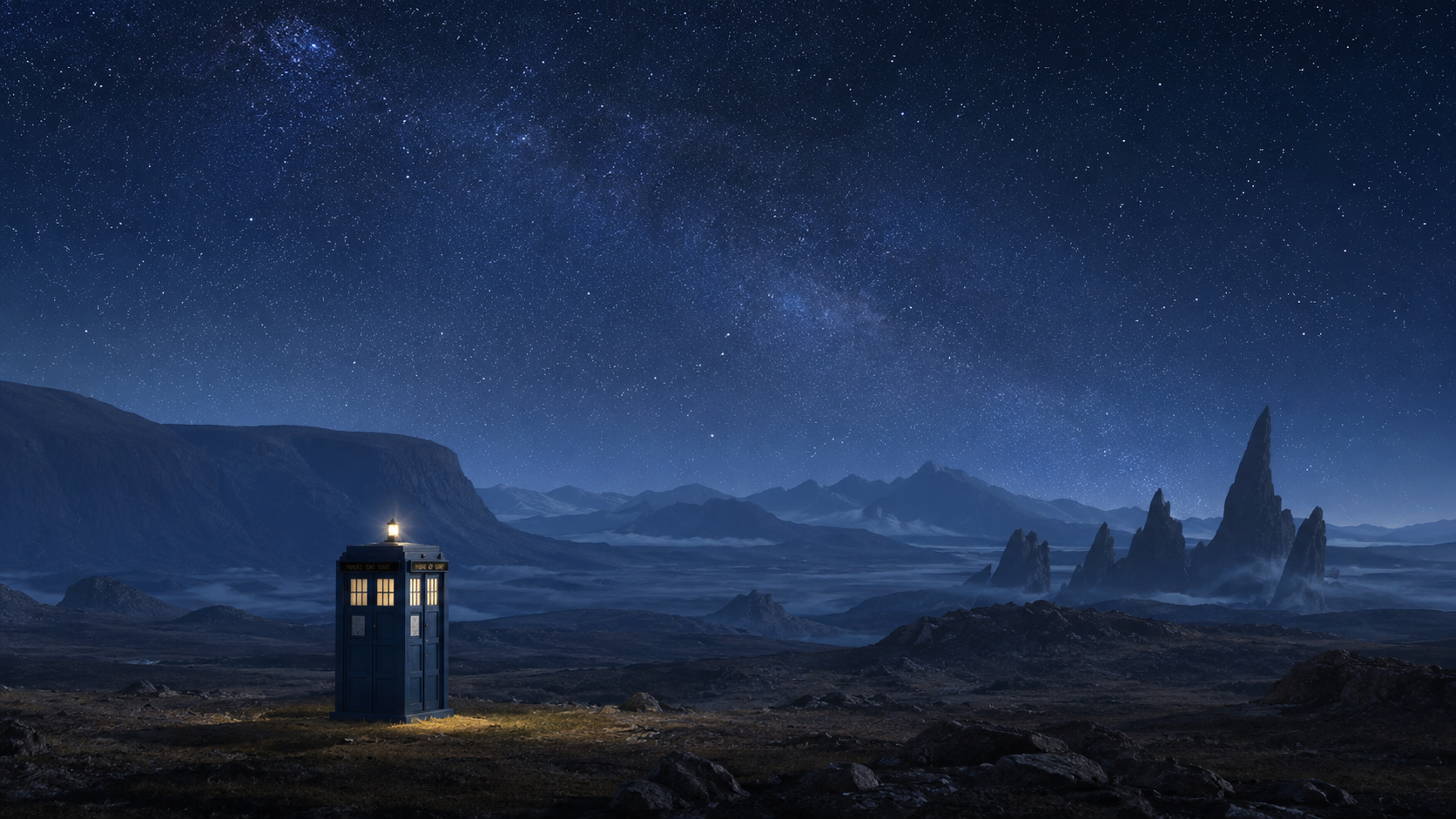
Davies posted his farewell within the hour, and it's a small masterpiece of the genre. GOODBYE from me — but HELLO to a big new future. No Christmas special, because they'd only "cooked that up" to guarantee a future, and now the future's guaranteed, so why bother. For the record, he added, there was no script, he never wrote it, no actor was ever approached. This from the man who'd previously teased three specific words that were supposedly in that script. Vworp vworp. The blue box spins its wheels.
I don't really want to litigate the post. I want to talk about what it's the receipt for.
Here's a shape worth noticing. Doctor Who ran from 1963 to 1989, died (though that death and the subsequent Wilderness Years included a bevy of wonderful books, comics, etc.), and came back in 2005 for a second run that ends, functionally, today. Star Wars gave us three films from 1977 to 1983, then the prequels, then a sequel trilogy from 2015 to 2019. The most recent stretch of each — the sequels, the last couple of Who seasons and specials — carried some level of Disney involvement. I'm not going to claim that's causal. For Who it can't even be cleanly coincidental: the creative trouble predates Disney's arrival by years, and Disney has already exited the partnership as of last year. But the rhyme is there, and the rhyme is the interesting part.
Because both franchises were great for the same reason, and both curdled for the same reason, and the reason has nothing to do with who signed the checks.
Star Wars was great when it was a samurai film, and a WWII dogfight picture, and a Western, all wearing a science-fiction coat. It looked outward — at Kurosawa, at war movies, at myth — and brought the loot home. Doctor Who was great because from week to week, season to season, Doctor to Doctor, it didn't have to be any one thing. It could be horror, then farce, then a base-under-siege, then something that genuinely wrecked you. The format's whole engine was that the lead could walk into any genre and the show would simply become that genre for forty-five minutes. The strength was the looking-outward. The world, galaxy, universe was the material.
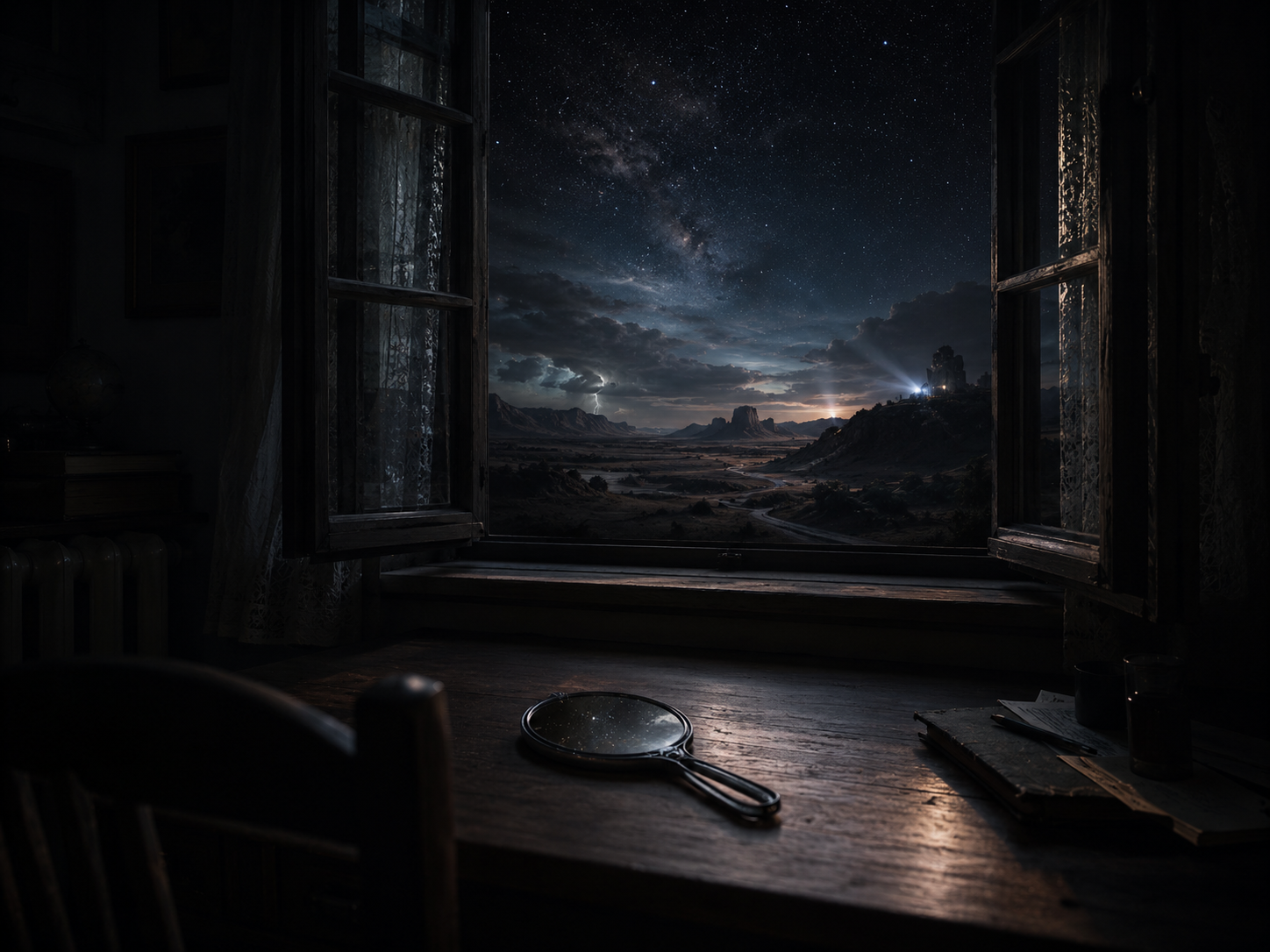
Then, in both cases, the camera turned around. The franchise stopped looking at the world and started looking at itself — at its own history, its own mythology, its own cleverness. And a franchise admiring itself preening in the mirror is a much less interesting thing than a franchise looking out a window and talking about what it sees out there.
That inward turn has two distinct flavors, and it's worth pulling them apart, because they feel similar but aren't.
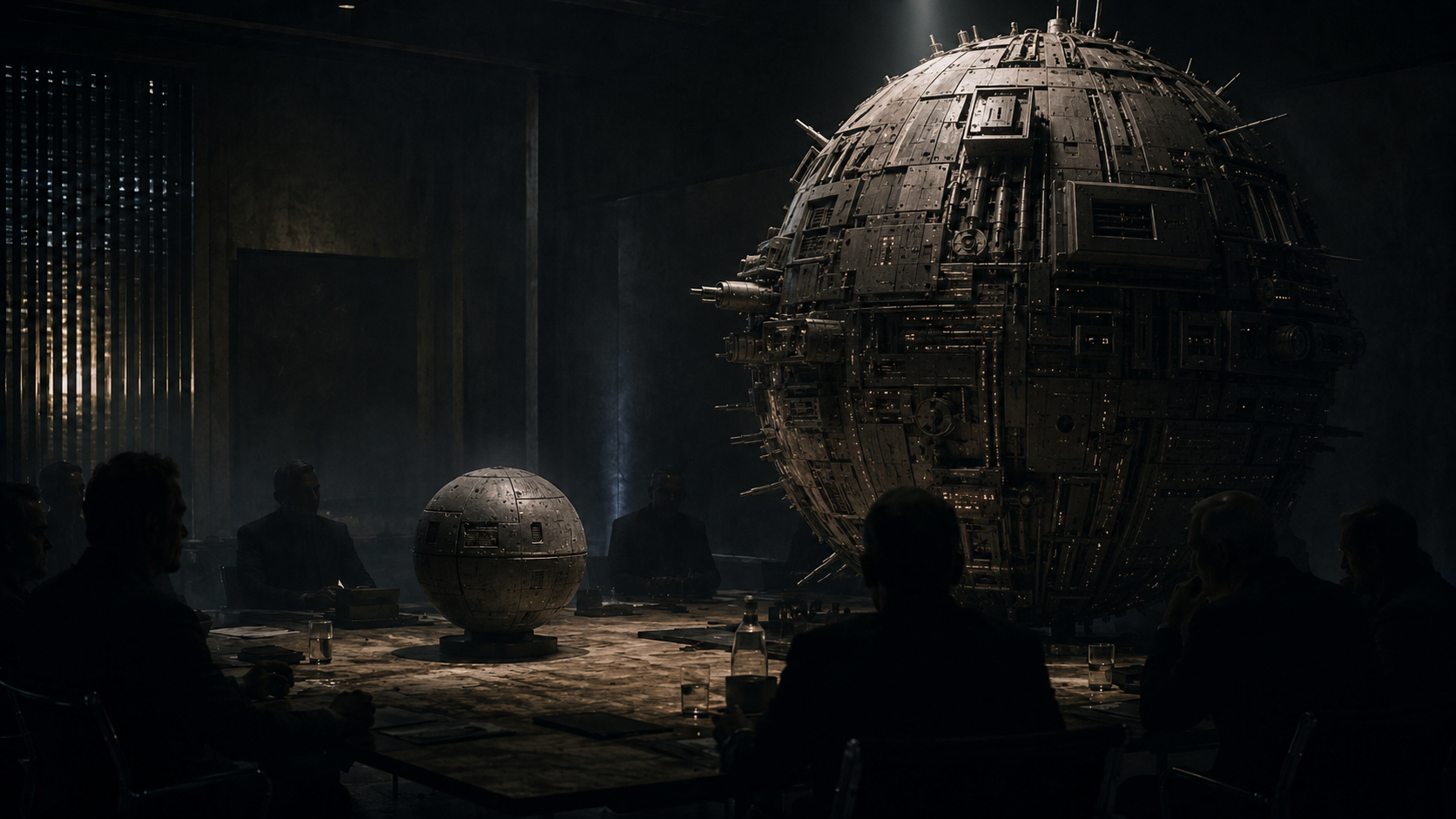
The first is nostalgia proper: looking backward at the franchise's own past and serving it back to the faithful. Star Wars did it by resurrecting Palpatine — somehow — and by scaling the Death Star up into a whole Death Planet, as if the answer to "we've seen this" was "yes, but it's bigger." Doctor Who did it by bringing David Tennant back as the Fourteenth Doctor, by reaching into the archive for CGI Sutekh (a villain last seen in a single serial in 1975) and then, a season later, CGI Omega as a Zombie-thing (last seen in 1983, before that in 1973), each deep cut older than the last, the show digging further and further down its own shelf. It brought back the Rani, bi-generated her into two Ranis, and then had Omega eat one of them.
And here is the detail that tells you everything. The "two Ranis" joke that the surviving antecedent Rani makes when her bigenerated counterpart gets eaten by said Omega — Davies already made it. In 2009, in a Sarah Jane Adventures Comic Relief special, he cast Ronnie Corbett as a Slitheen named Rani, so that Corbett and Rani Chandra could be "the Two Ranis," a pun on the Two Ronnies, complete with a "Four Candles" callback. Sixteen years later he kept the joke and threw away the only thing that justified it. No Corbett. No Ronnies. Just the hollow shell of the gag, recycled, because it was there. That is the inward turn at the scale of a single line: a writer nostalgic for his own bits.
The second flavor is subtler and, I think, worse: not looking back at the history but inward at the protagonist, inflating his importance until he buckles. Star Wars did this by making Rey a nobody — and then losing its nerve and revealing her, psych, as a secret Palpatine, because apparently the universe could no longer tolerate a hero who simply was one. Doctor Who did it with the "Timeless Child," the retcon that made the Doctor not a conscientious runaway with a stolen box but the literal mysterious origin of his entire species, with secret incarnations stretching back before the beginning. One of those was the great Jo Martin's Fugitive Doctor — which means that by the show's own mythology, the first Black actor to play the Doctor did so in 2020, quietly cutting the legs out from under Ncuti Gatwa's billing as the first, three years before he arrived. Then the bi-generation in 2023 split Tennant off from Gatwa and left a spare Tennant Doctor wandering the universe, so that the very moment we were meant to move on, emotionally, to the new man — the thing we have done without incident since Troughton replaced Hartnell in 1966 — the old one was still out there, retired, but canonically alive.
The Doctor is already a time-traveling alien with two hearts in a magical ship that is also his home that can travel anywhere in time and space who regenerates into new faces with new personalities as he meets and travels with friends from anywhere in time or space that he meets along the way while he does his best to make the universe or galaxy or world or continent or country or town he's in a little bit of a better place. You don't need to pile on chosen-one mythology or manufactured eccentricity to make him special, because the premise is the most special thing on television and was from the start. Reaching for more specialness is a confession that you've stopped trusting the premise. The Doctor was enough. The Doctor is enough. Making him Cosmically Important™ is what you do when you no longer believe a madman in a box clears the bar.
That both turns happened across two different showrunners — the Timeless Child was Chibnall, the bi-generation was Davies — is not a knock on either man so much as the proof. When two writers with opposite sensibilities, a decade apart, both walk the show into the same mirror, you're not looking at a bad creative decision. You're looking at the gravity of an aging franchise. Ask Paramount, which just cancelled Starfleet Academy after two seasons of low numbers, another beloved old property that turned inward and found no one outside the family had come.
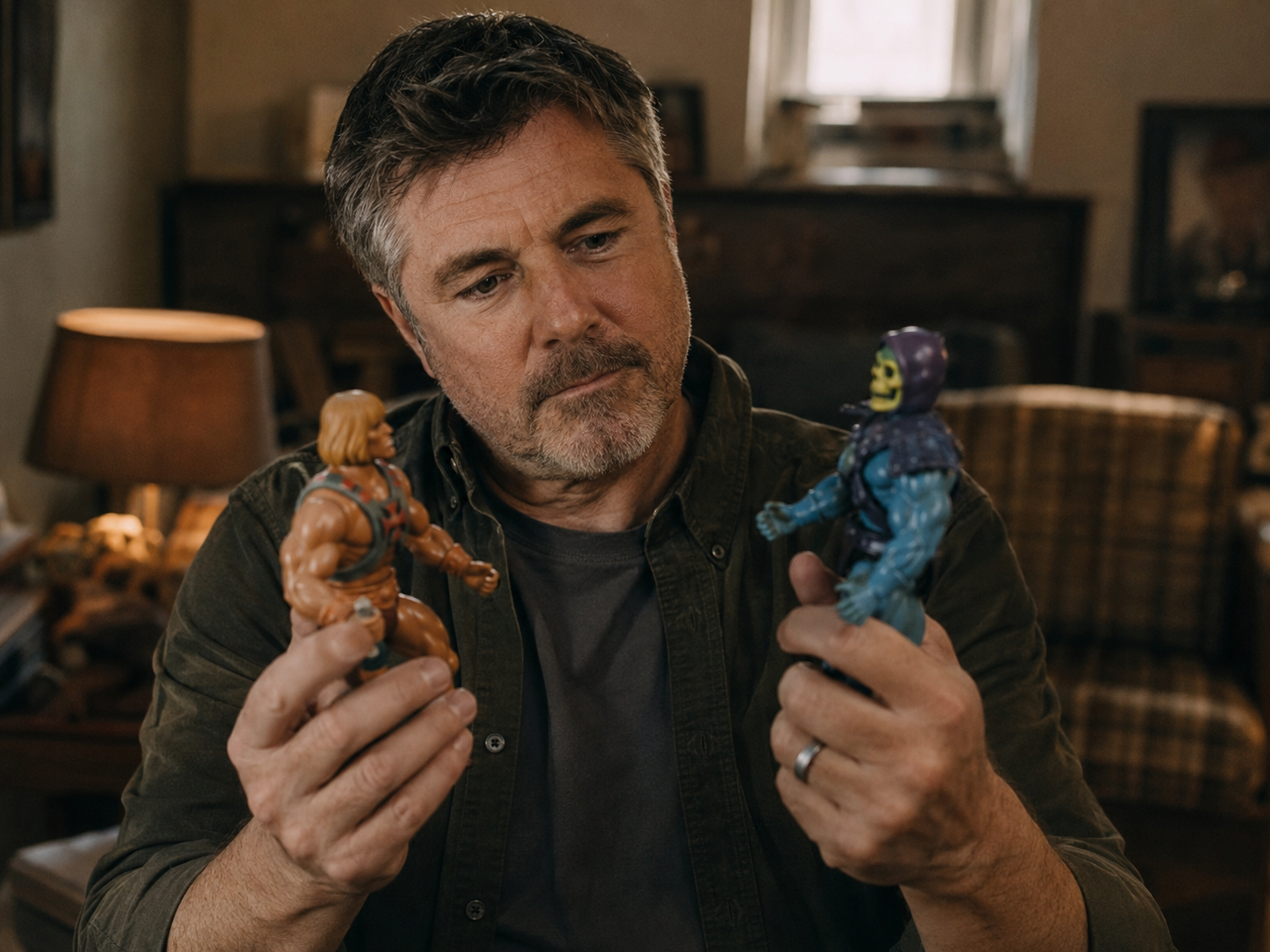
I want to be fair to the move, because fan service isn't a sin and fanwank isn't a felony. A callback can be a gift. And here is where I have to turn the lens around on myself, because I just watched the new Masters of the Universe, and I loved it.
It bombed. Opened to about $29 million on a budget north of $170 million, behind Scary Movie 6, a flop by any accounting. And when you look at who actually showed up, the single largest group was the 45-to-54 crowd, with almost no one under eighteen in the building. The film went looking for the people who grew up with the cartoon and the (they're not dolls, they're) action figures, found exactly them, and discovered they can't fill a multiplex by themselves.
I'm forty-seven.
So when I tell you the movie is good — and I think it is, and its audience score agrees with me — I need you to notice what I am, which is not a critic. I'm a target it hit. The thing was engineered, with some precision, to make a man my age feel the specific warmth I felt, and I felt it on cue, exactly as designed. I can't cleanly separate "this is good" from "this was built for me," and I'm no longer sure the distinction survives contact with my own delight.
That's the whole problem, scaled down to one ticket. Nostalgia can't recruit. It can only reconvene. It gathers the people who were already there and gives them the warm flush of recognition, and it calls that warmth success right up until the lights come on and the room turns out to be only as big as the people who came pre-loved. Doctor Who spent its last seasons reconvening — Tennant, Sutekh, the Rani, Omega— and the tender notice this morning is the size of the room when the reconvening stopped working.
A show this old has earned the right to a little fan service. The Masters of the Universe movie earned its riffs. But a franchise cannot survive on being recognized. It has to be, underneath the recognition, a good show — one that's still looking out the window rather than the mirror, seeing something other than its own reflection.
Vworp vworp.