The Virginian
The surprising ties between Texas Jack, Gary Cooper, and The Virginian.
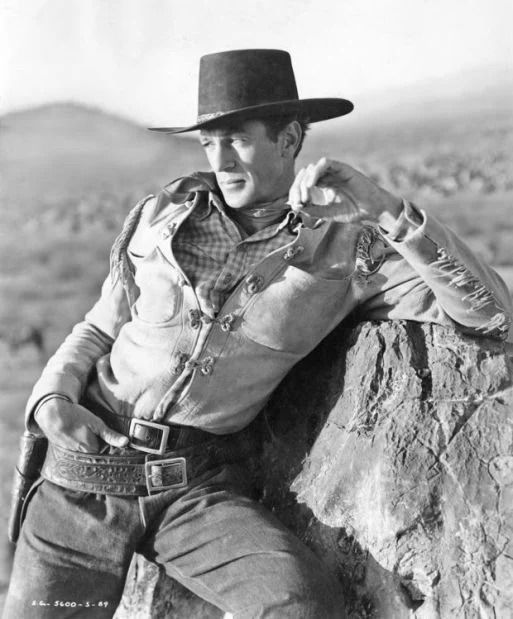
Gary Cooper's understated natural acting won him many admirers. In the pantheon of Western leading men, he is matched only by fellow genre definers John Wayne, James Stewart, and Clint Eastwood. One of the few actors whose stardom carried him from silent films to "talkies," Cooper was the rare talent that appealed to both men and women. His first sound picture was 1929's The Virginian, based on the Owen Wister novel of the same name. The novel had been adapted twice into silent films, but Cooper's version (directed by Victor Fleming, who likewise directed The Wizard of Oz and Gone With The Wind) was the first sound version. The novel would be adapted to film again in 1946, starring Joel McCrae, and into a television series that ran for nine seasons starting in 1962 and starring James Drury in the title role.
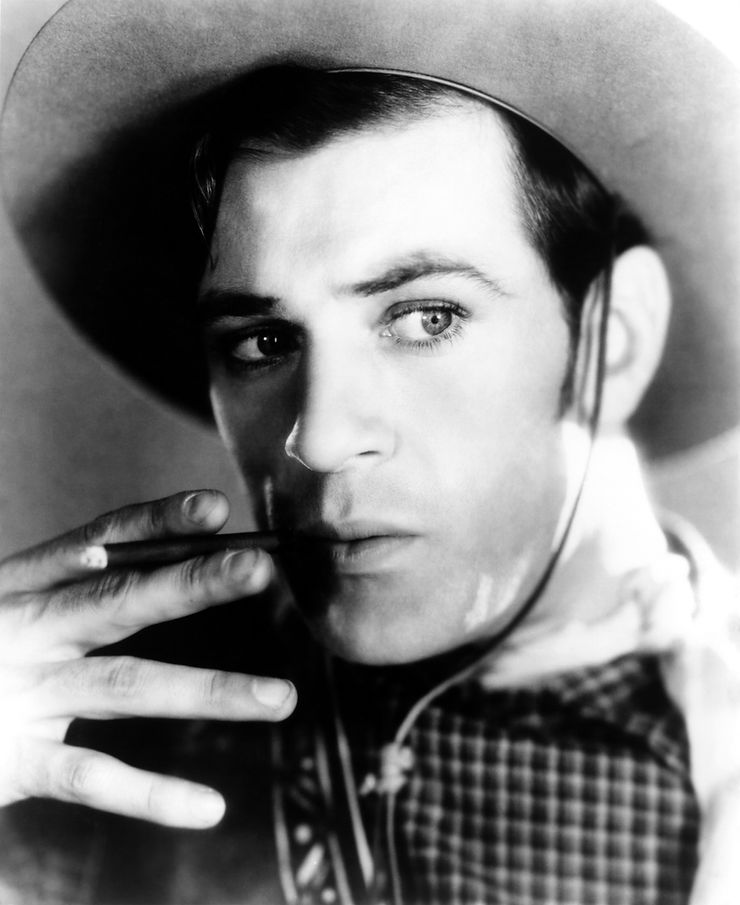
The film's title character is only known as the Virginian, a former Confederate soldier who has spent time on the cattle trails of Texas but has relocated to Medicine Bow, Wyoming, where he works at the Box H Ranch. A man of few words, the Virginian is described as "a tall, dark, slim young giant, with a deep personality."
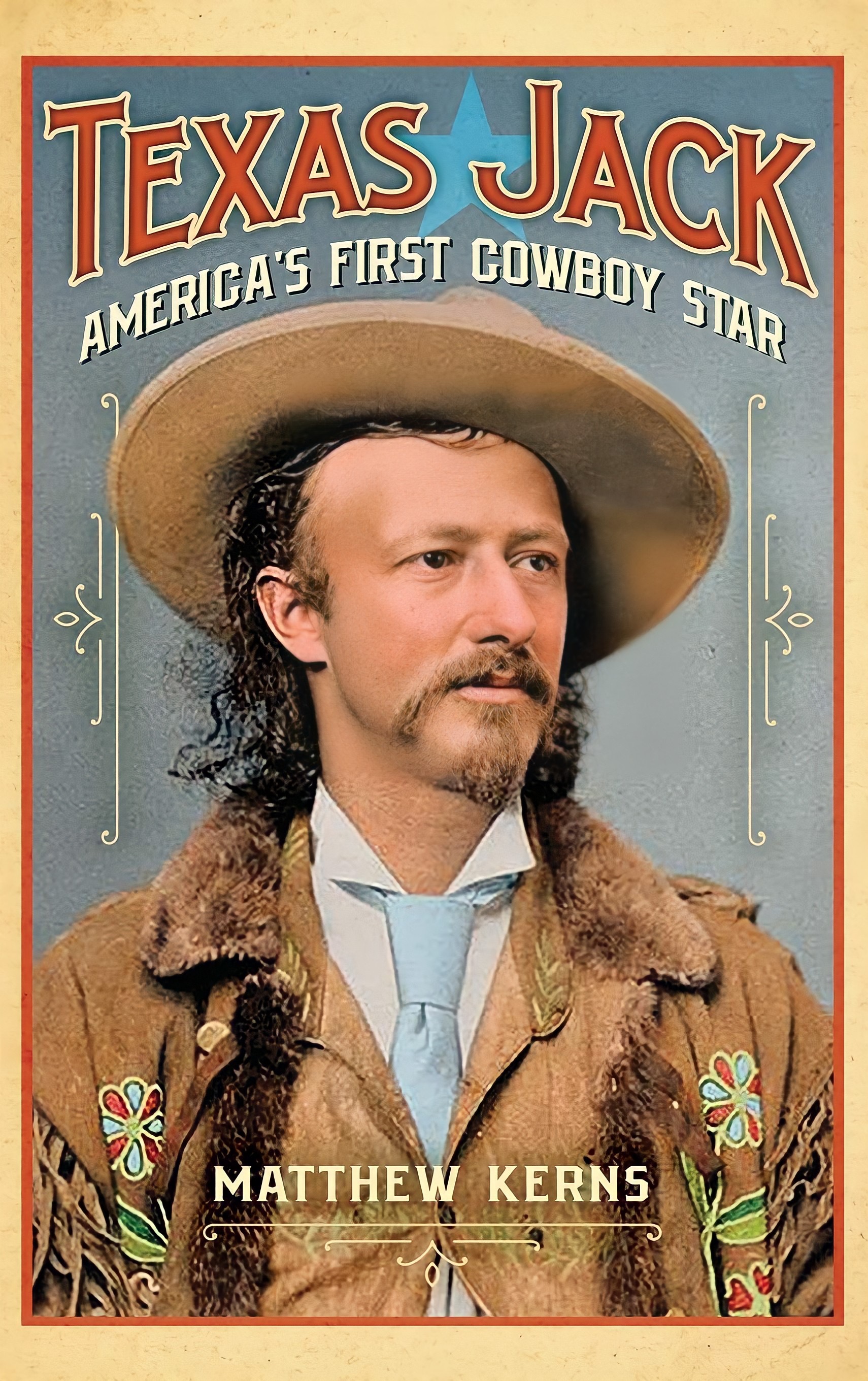
Owen Wister's novel The Virginian, widely recognized as a seminal work in establishing the cowboy as an American folk hero and the Western as a legitimate literary genre, may have been influenced by the life of Texas Jack Omohundro. Texas Jack, born in Virginia like Wister's character in The Virginian, led a life that embodied many elements of the classic Western hero. He served in the Confederate cavalry, ventured through the cattle trails of Texas, and explored the wilds of Wyoming. His adventures and reputation as a cowboy, scout, and Western showman made him a legendary figure in the American Old West, aspects that resonate with the thematic elements and character traits in The Virginian."
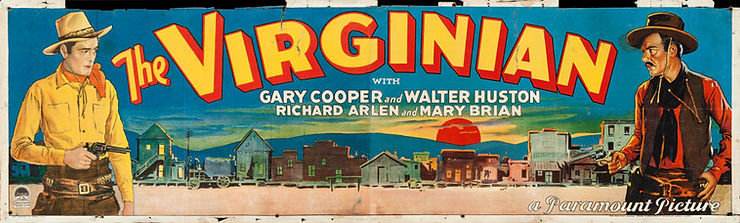
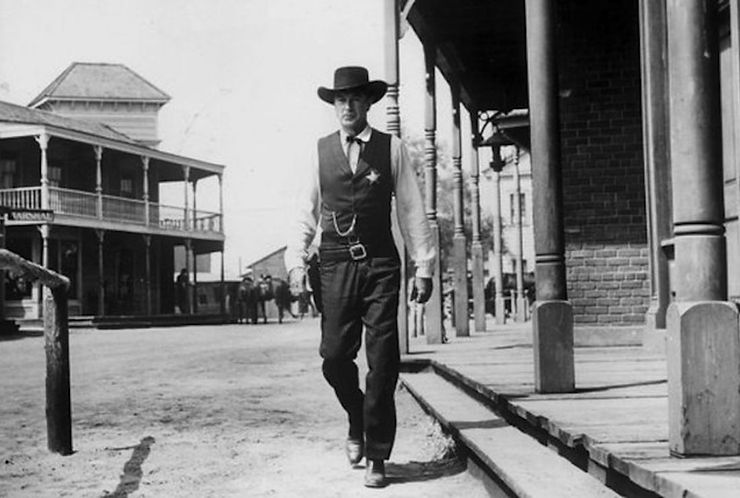
The earliest and best of the sound movie Westerns, The Virginian was later remembered by Gary Cooper as his favorite movie he had ever made. It would very likely be considered Cooper's best Western role if not for 1952's High Noon, which like The Virginian sees the heroic lead, played by Gary Cooper, forced to risk the love of life by choosing to face a violent enemy.
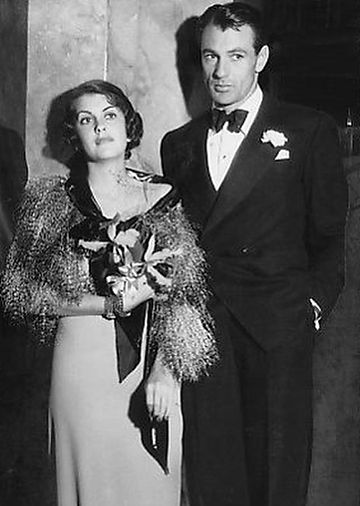
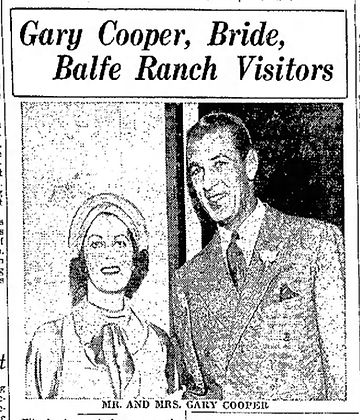
Between The Virginian in 1929 and High Noon in 1952, Gary Cooper met and fell in love with Veronica Balfe, a New York debutante and actress. Every bit Cooper's match in horseback riding and shooting (she was the female skeet champion of the state of California in the 1930s), Balfe accepted the actor's marriage proposal, and the pair were wed on December 15th, 1933, at the home of Balfe's mother, on New York's Park Avenue.
Balfe and her father had very little contact after her parents' divorce, but she often visited her grandfather's ranch near Fresno, California. There, on one of the largest ranches in the state, Veronica learned to ride and shoot and listened to her grandfather Harry tell the history of his collection of Western memorabilia. Later, Cooper would join her on the ranch and delight in the same authentic artifacts that his wife had grown up loving.
Harry Balfe was born in New York, but after starting as a sales manager at wholesale grocer Austin, Nichols & Company, he worked his way up to manager, then vice president, and then president. When he retired in 1920, Harry Balfe was the CEO of the world's largest wholesale grocery business. Harry was instrumental in moving the business to the Austin, Nichols, and Company Warehouse, a massive Egyptian-Revival-style building on the Brooklyn side of the East River.
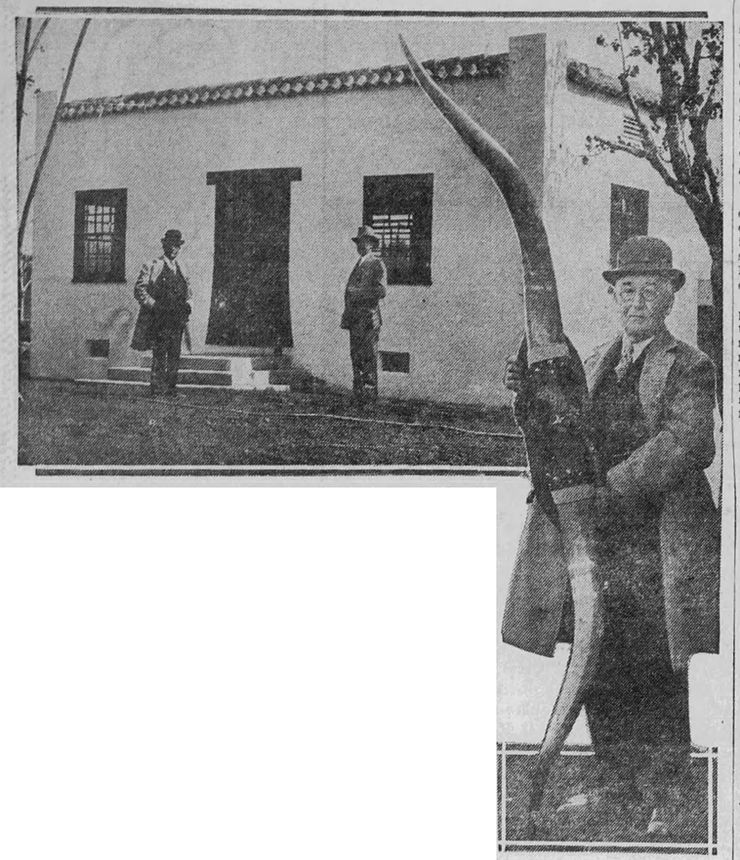
Determined to own the finest ranch in the San Joaquin Valley, Harry Balfe spent over a million dollars on his place on Herndon Avenue, 4 and 1/2 miles northeast of Clovis, California, and his ranch became a mecca for his granddaughter and her famous husband, as well as visitors from all parts of the United States. Befitting his status as the world's most successful grocer, Balfe's ranch grounds were said to produce every variety of fruit and other product commercially profitable in central California. The Balfe Ranch was approximately one thousand acres and was developed as one of the show places of California. There were more than twenty buildings on the place; it had its own wells with a pumping system distributing water by underground pipes to various parts of the ranch, all run by electric power. The products included almonds, oranges, peaches, apricots, and figs, and a vineyard housed 150,000 grape vines. The Balfe Ranch had the only privately owned airplane landing in the San Joaquin Valley.
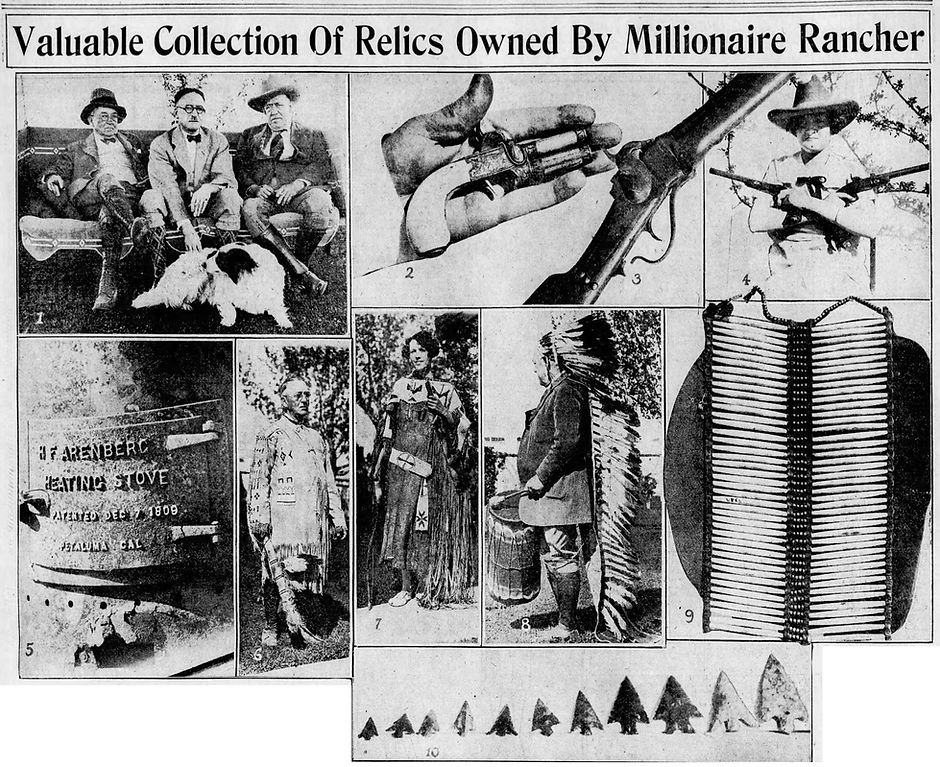
One of Mr. Balfe's principal interests was the breeding and ownership of blooded horses. He owned some of the finest horses in America and won hundreds of blue ribbons, cups, etc., all of which were exhibited in his trophy room. According to one newspaper report, "Mr. Balfe also has perhaps the finest private museum in California, housed in a specially built structure, where are displayed many valuable Indian relics, souvenirs, and antiques of pioneer western days."
One wonders if, on one of Gary Cooper's many visits, he was invited by his wife's grandfather to admire or even to fire the prize of the Balfe Collection, a rifle once owned by Texas Jack Omohundro. The story that Balfe often told about the gun centered on the distinct pattern of tacks pounded into the rifle's stock. According to Balfe, the rifle had been carried by Texas Jack during his time at Fort McPherson on the Nebraska frontier. "Texas Jack, when out on an expedition with Buffalo Bill, prevented the capture of his companion by killing with this gun seven of the nine Indians who attacked them, And so as not to forget, in those stirring, Indian fighting days, the incident, Texas Jack drove into the stock of the old gun seven brass-headed tacks. They are still in the gun. So is his name, written out in full."
It's easy to imagine Gary Cooper, star of The Virginian, admiring the rifle of Texas Jack, who, like Cooper's character in that movie, was born in the Old Dominion state, served in the Confederate cavalry, braved the cattle trails of Texas, and explored and hunted the wilds of Wyoming. When it comes to the heroes of the American West, both in fact and on film, it really is a small world.