
Very Pedestrian
Long before football was the King of spectator sports in America, fans crowded tracks to catch a glimpse of athletes like Ada Anderson, the world's greatest walker.
In an era where the thunderous roars of football crowds dominate American stadiums, it is easy to forget that football hasn't always been the King of American spectator sports. Today, from high school through college and into the National Football League, football draws fans into stadiums and into their living rooms more than any other single sport, with 44 million spectators tuning in to the Dallas/Washington NFL game on Thanksgiving and over 25 million spectators watching this year's NCAA Championship game between the Michigan Wolverines and the Washington Huskies.
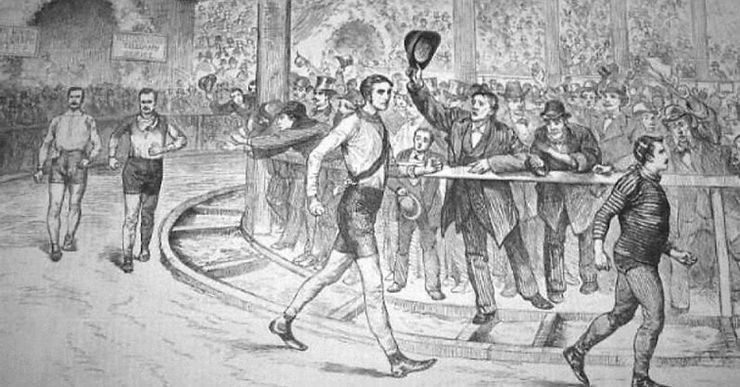
But in the 1870s, when men like Texas Jack and Buffalo Bill traded in their spurs and saddles and stepped from the frontier towns of the American West on the stages of theaters in the East, American football was but a nascent sport, barely known beyond the confines of Rutgers and New Jersey (later Princeton) University fields. It wasn't the gridiron battles that captivated the nation then; it was the peculiar and exhilarating spectacle of competitive walking, or pedestrianism.
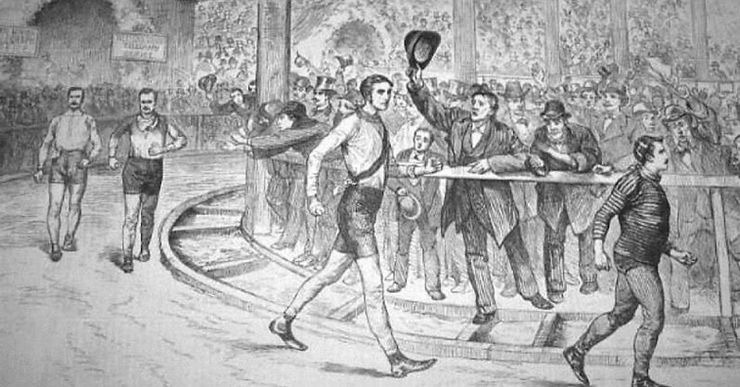
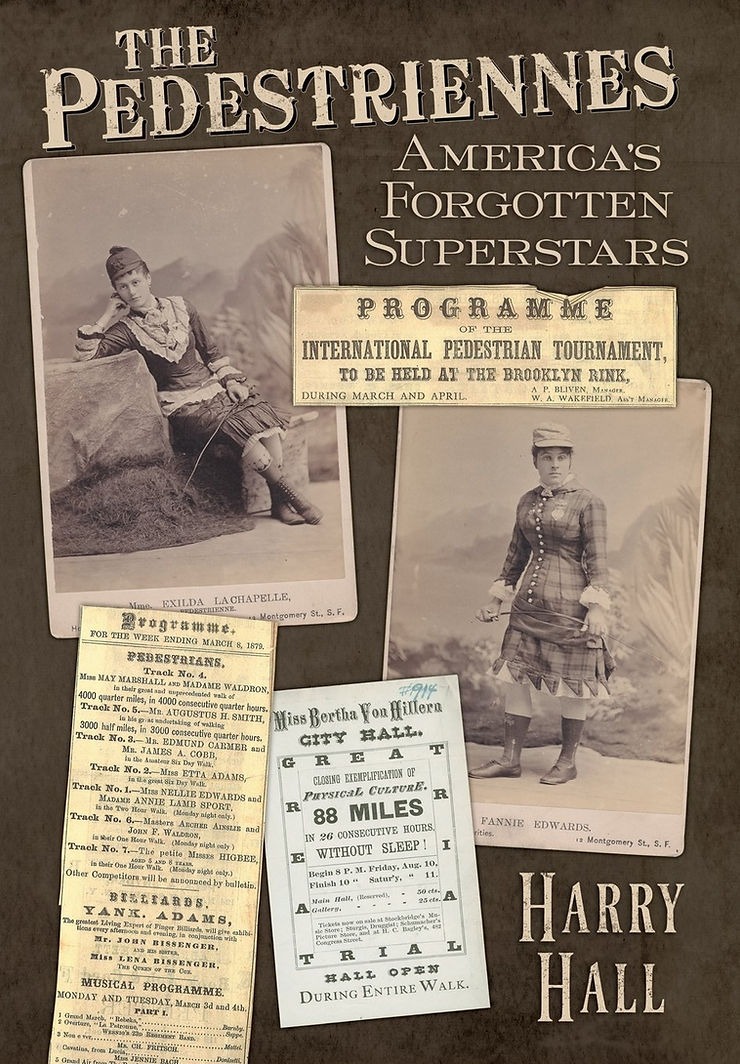
Imagine a time where the high-octane sports of today were unheard of, and instead, the nation was gripped by the drama of pedestrianism, a post-Civil War phenomenon that transformed ordinary walking into an arena of fierce competition. Superstars like Edward Payson Weston emerged, undertaking Herculean feats such as traversing 1,136 miles from Portland, Maine, to Chicago in a mere 30 days, winning a staggering $10,000 prize in the process. This sport wasn't just for men; women too took center stage, with figures like Elsa von Blumen captivating audiences by walking 100 miles, all amidst a backdrop of high-stakes gambling.
Across the Atlantic, the sport flourished too, epitomized by the beloved Madam Ada Anderson. Her journey from a theater performer to a pedestrianism icon is a saga of resilience and ambition. Born Ada Nymand, she left home at 16 to join a theater company and five years later married the man whose name she was most commonly known.
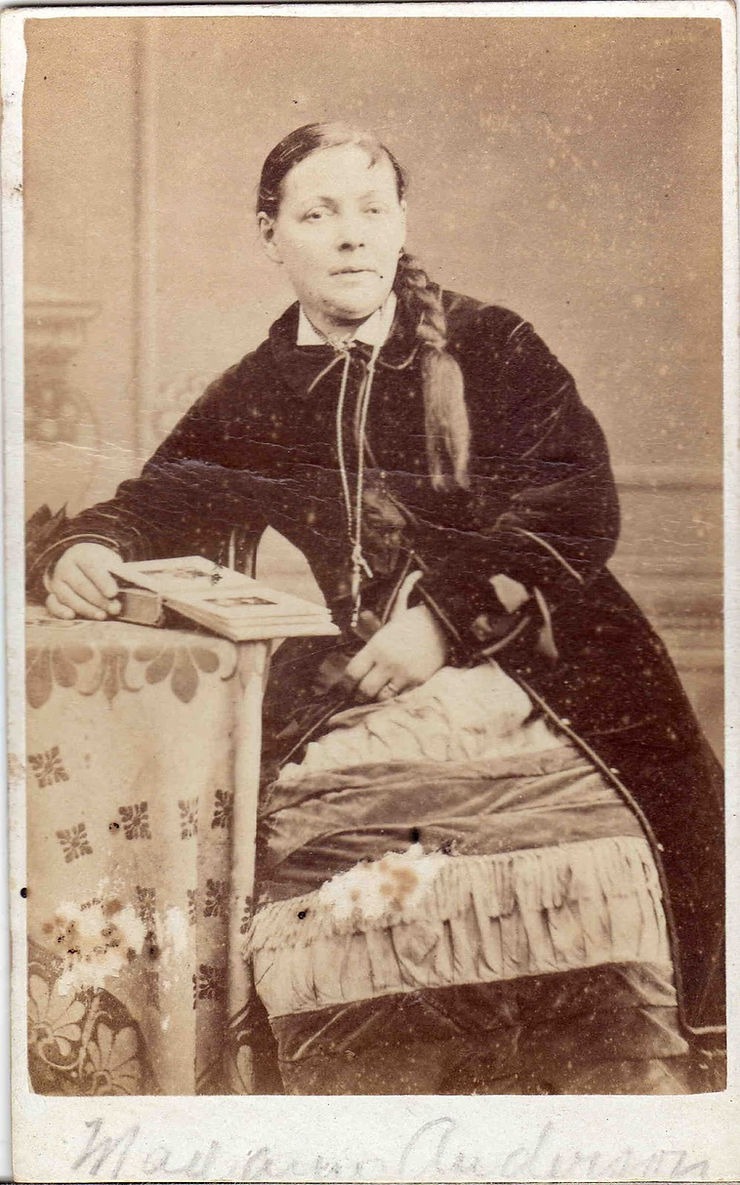
During her theatrical career, Ada was a singer, a clown, and a theater owner, but her lifelong ambition was to become famous—to accomplish something that no one else could. She did not achieve fame or success as an actress but eventually bought a theater in Cardiff, Wales, with her husband, who sadly died soon after, leaving Ada on the brink of bankruptcy.
In 1877, the year her husband died, she met champion British race-walker William Gale, who agreed to train her in the sport. After six rigorous weeks of training, she competed in her first event, where she walked 1,000 half-miles in 1,000 half-hours, with no more than 20 minutes of rest at one time during the entire three-week trek. There were several days of rain that required her to walk with an umbrella and a lamp, but storms couldn't stop Ada from finishing.
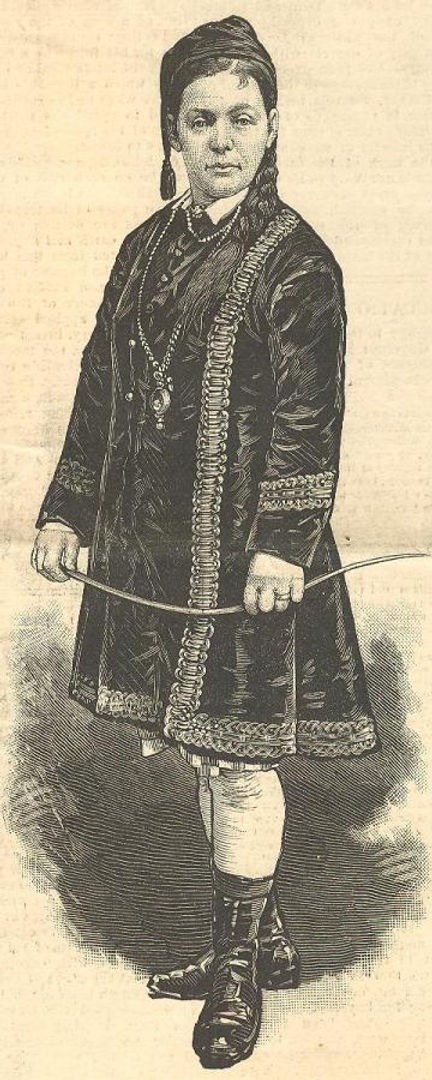
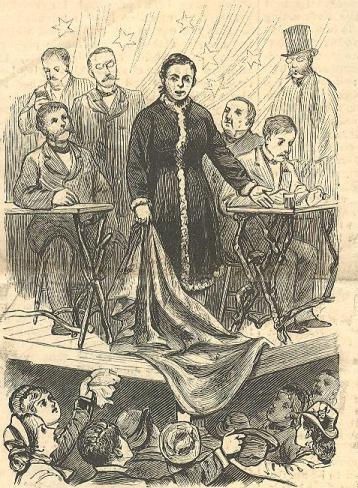
After a year of winning races in Britain, Ada was determined to make a name for herself in America. An event was planned for Gilmore's Garden (later Madison Square Garden) in New York, until the owner decided, "The woman will never accomplish the feat and nor can any woman." The event was moved to Brooklyn's Mozart Garden, where it began on 16 December 1878. As many as 4,000 spectators visited the 189-foot track on which Ada would walk 675 miles (2,700 quarter-miles) in 675 hours (2,700 quarter-hours) before the event ended on January 13, 1879.
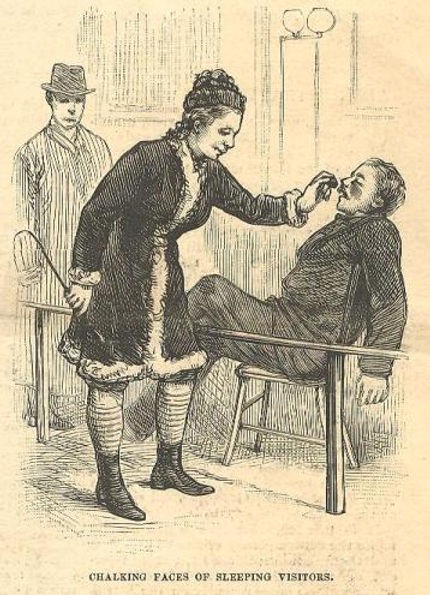
During the event, Ada made fans by singing during her rest breaks. Fifty-five miles into the event, she played the piano and sang Giuseppe Verdi's "Back to Our Mountains," which attracted more spectators as word got out. She also entertained the crowd by marking the faces of sleeping spectators with coal or chalk.
Because of heavy wagers on the completion of the event, Anderson required protection in the final days of the walk, with reports of attempted gassing with chloroform denied by Anderson herself. By the final day of her walk, Mozart's Garden was so packed that police had to prevent additional spectators, many of whom were women whom the New York Times reported regarded Anderson as "the most wonderful of their sex."
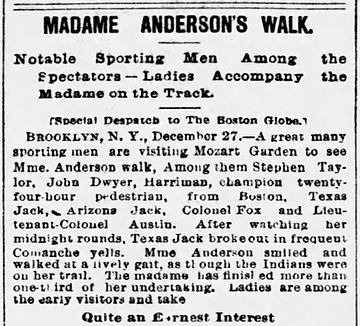
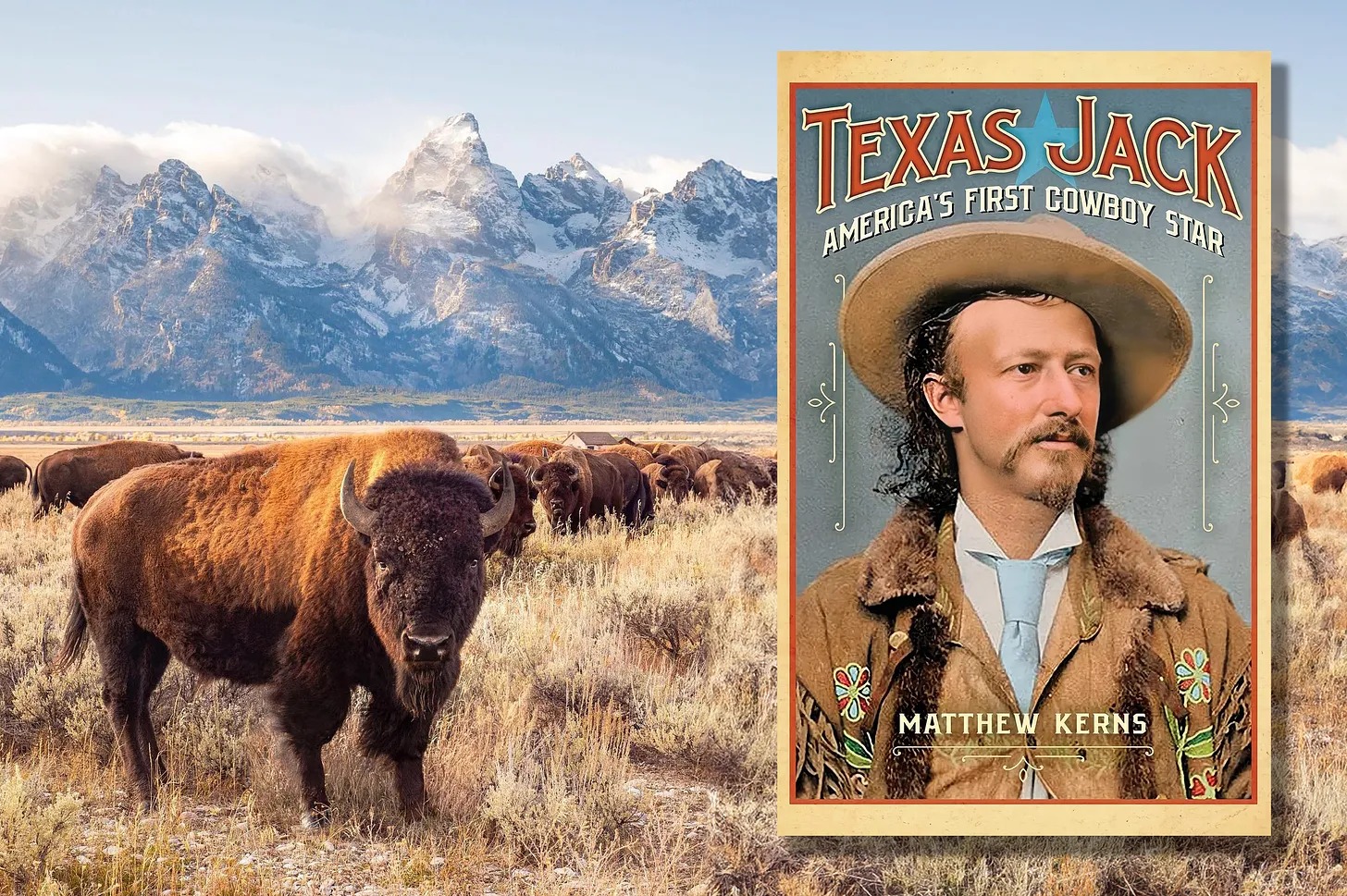
Many famous people stopped by to view Ada's feat of pedestrianism, including General Tom Thumb, a performer in the circus of P. T. Barnum. Texas Jack came to Mozart's Garden with Donald McKay and John M. Burke on December 27th. According to the Boston Globe, "After watching her midnight rounds, Texas Jack broke out in frequent Comanche yells. Mme. Anderson smiled and walked at a lively gait, as though the Indians were on her trail."
As the golden age of pedestrianism reached its zenith in 1878, the indomitable Ada Anderson continued to blaze a trail of glory across America. Her footsteps echoed in the bustling streets of Pittsburgh, Chicago, Cincinnati, Detroit, Buffalo, New York City, and Baltimore, each stride a testament to her unyielding spirit and endurance. Meanwhile, across the ocean in England, the world of pedestrianism was undergoing a monumental transformation. Sir John Astley, inspired by the feats of these walking titans, established the "Long Distance Championship of the World" in 1878. Known as the "Astley Belt Races," this six-day endurance trial became a crucible for the sport, stretching the boundaries of pedestrianism with allowances for trotting, jogging, and even running.
This revolutionary event did more than just captivate audiences; it signaled a pivotal shift in the sport's narrative. Once mired in the shadows of gambling and corruption, the Astley Belt Races ignited a movement to reimagine pedestrianism as a beacon of amateur athleticism, a pursuit of physical excellence untainted by the vices of the era. This transformative spirit did not just stay confined to the walking tracks; it rippled outwards, infusing itself into the very heart of British track and field athletics.
It was this spirit of renewal, this quest for purity in sport, that eventually gave birth to the modern Olympic Movement. In this crucible of change, Ada Anderson's legacy transcended her own incredible achievements. Her footsteps on those historic tracks were not merely a display of physical prowess, but a catalyst for a global revolution in sports, heralding the dawn of a new era where the Olympic ideals of integrity, excellence, and respect were enshrined. Thus, as the curtain fell on the age of pedestrianism, it rose to reveal a new stage - the modern Olympic arena, where the spirit of Ada and her contemporaries would forever echo in the footsteps of athletes from around the world.
https://amzn.to/3RYv9DZ