Seashells & Sedition
The President of the United States has gotten the Justice Department to indict a man over a photograph of seashells.
That, unlike much of what follows herein, is unfortunately not a satirical sentence. James Comey, the former director of the FBI, surrendered to federal authorities on Wednesday morning to answer two felony counts carrying a potential combined ten years in prison. The crime? Posting a picture on Instagram, last May, of some shells someone had arranged on a North Carolina beach to spell out "86 47."
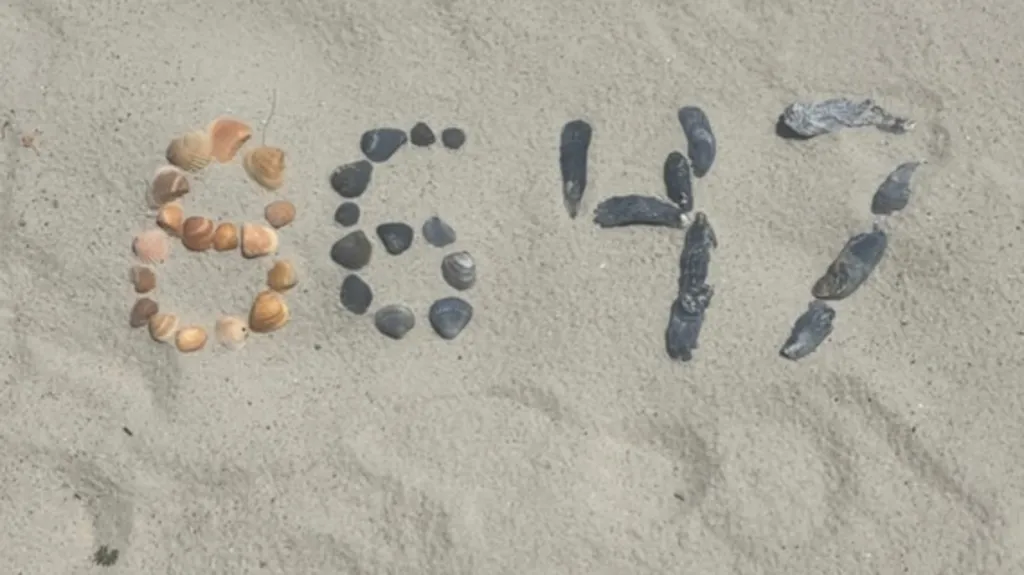
The caption read, in full, "Cool shell formation on my beach walk." Comey deleted the post the same day. He explained that he hadn't realized some people associated the numbers with violence and that he opposes violence of any kind. None of this saved him. A grand jury in the Eastern District of North Carolina returned an indictment Tuesday afternoon alleging that the shells, and Comey's act of photographing them, constituted a "serious expression of an intent to do harm to the President of the United States."
This is the second time in eight months that the Trump Justice Department has tried to put James Comey in prison. The first attempt, an indictment last September on charges of lying to Congress, was tossed by a federal judge in November after it emerged that the prosecutor who secured it — Lindsey Halligan, a former personal lawyer to the President — had been unlawfully installed in the U.S. Attorney's chair. The same ruling sank a parallel case against New York Attorney General Letitia James. Two months ago, the President fired Pam Bondi and replaced her with Todd Blanche, another of his former personal attorneys, who now runs the Department of Justice in an acting capacity. The DOJ has investigated Adam Schiff for mortgage fraud and the Southern Poverty Law Center for whatever bullshit they could think of. A career prosecutor was reportedly removed earlier this month from the John Brennan investigation after voicing concerns that the case was being rushed.
The pattern isn't subtle, and it doesn't need decoding. In September of last year, Trump posted on Truth Social directly instructing Bondi that "we can't delay any longer" and named Comey, James, and Schiff in the same breath — "they're all guilty as hell." James was indicted weeks later. Schiff was investigated. Comey has now been indicted twice. None of this is about law enforcement. It is about hurt feelings with a grand jury at its disposal.
The First Amendment, as it happens, has something to say about hurt feelings.
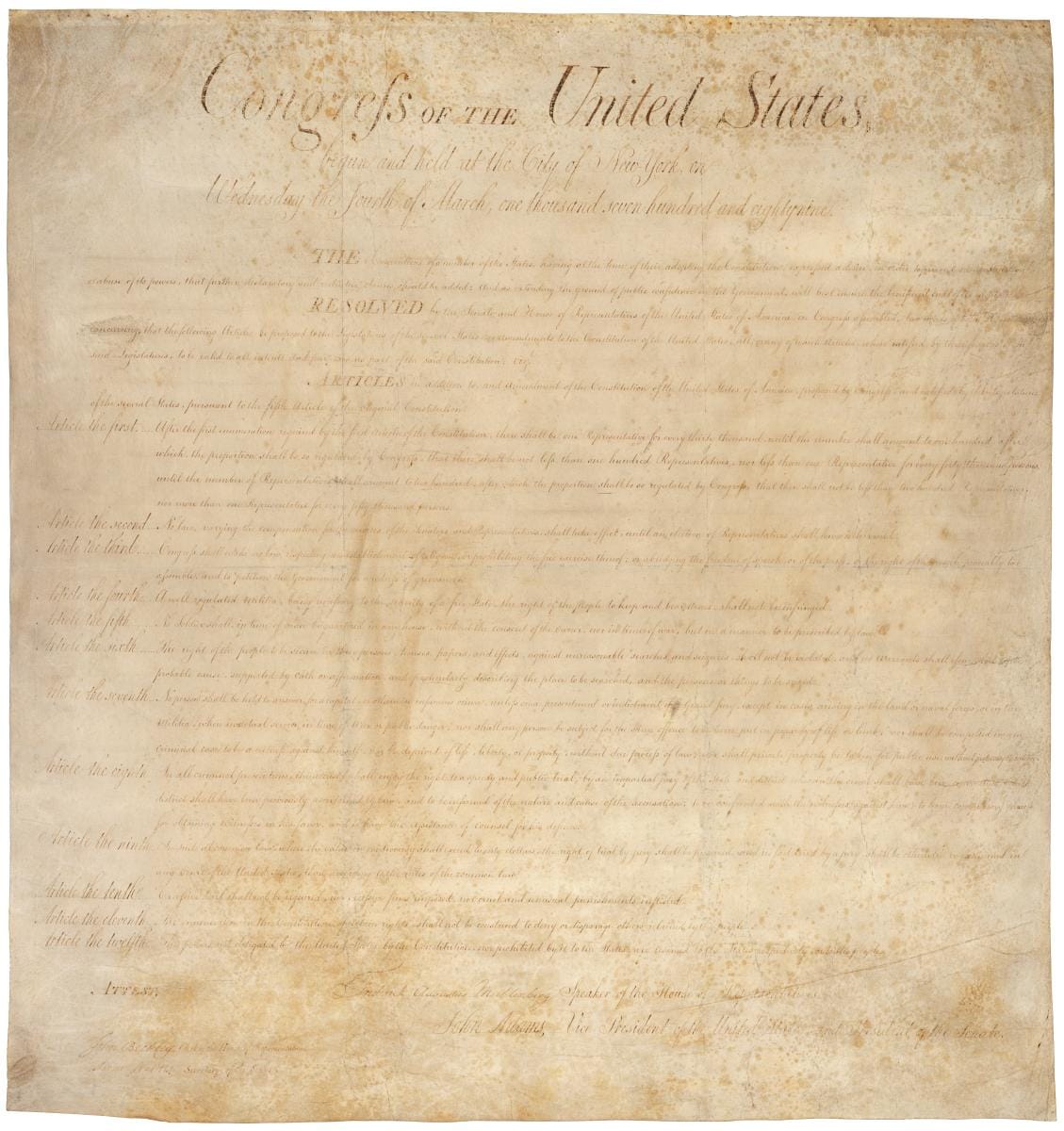
In August of 1966, an eighteen-year-old named Robert Watts stood at a rally on the Washington Monument grounds and announced that if the Army drafted him and put a rifle in his hands, "the first man I want to get in my sights is L.B.J." Watts was convicted of threatening the President under the same 1917 statute, 18 U.S.C. § 871, that has now been turned on James Comey. The D.C. Circuit upheld the conviction. Then the Supreme Court reversed it.
The opinion, per curiam in Watts v. United States, is short and very clear. "What is a threat," the Court wrote, "must be distinguished from what is constitutionally protected speech." A statute criminalizing pure speech "must be interpreted with the commands of the First Amendment clearly in mind." The Court took notice of context — a political rally, a young man, a hypothetical premised on a draft Watts swore he'd refuse, and a crowd that had laughed. Watts's words, the Court concluded, were "political hyperbole," not a true threat. "The language of the political arena," Justice opinion continued, "is often vituperative, abusive, and inexact." The conviction was reversed and the case sent back with instructions to enter a judgment of acquittal.
I'd like to point out, just for the historical record, that Bob Watts was saying his words out loud, not just taking a picture of a possibly numerical codification of them on a beach somewhere and saying they were interesting.
There were earlier cases that came out the other way, and the Watts opinion catalogs them with what reads, here at a half-century's distance, like quiet embarrassment. A man was convicted in 1917 for declaring that "President Wilson ought to be killed. It is a wonder some one has not done it already. If I had an opportunity, I would do it myself." Another was convicted in 1918 for calling Wilson "a wooden-headed son of a bitch" and saying that if he had the power, he would put Wilson in hell. Those convictions came in the same WWI-era moral panic that gave us the Espionage Act and a Supreme Court so enamored of suppressing dissent it gave us the phrase "shouting fire in a crowded theater." We do not generally regard that period as the high-water mark of American constitutional thought. Watts was the Court correcting itself, and that correction has held for fifty-six years.
It has held, in fact, in increasingly speech-protective directions. In 2023, in Counterman v. Colorado, the Supreme Court ruled 7-2 that even where a statement is genuinely threatening on its face, the prosecution cannot win a true-threats conviction without showing that the defendant had some subjective awareness that his words could be taken as threats. Justice Kagan wrote the opinion. The minimum standard is recklessness. The speaker must have "consciously disregarded a substantial risk that his communications would be viewed as threatening violence."
This matters because Counterman came down in June 2023, almost two years before Comey's seashell post, and it controls. Whatever a "reasonable person" might think about a numerical sequence in a photograph of shells, the prosecution will have to prove, beyond a reasonable doubt, that James Comey himself understood the photo as a threat to the life of the President and posted it anyway. He deleted it within hours. He said publicly that he hadn't connected the numbers to violence and that he opposed violence of any kind. He sat for an hours-long interview with the Secret Service. None of this is the conduct of a man making a serious expression of intent to do harm to anyone. It is the conduct of a man who took a picture of some shells on a beach and posted it to Instagram.
This is, incidentally, also why the current President of the United States has been free for the better part of two decades to claim that Barack Obama was born in Kenya, was not a natural-born citizen, and was therefore ineligible to hold the office he twice held. Much like Trump's later bullshit claims that the election he lost to President Biden was stolen, none of this was true. Not one syllable of it ever survived contact with a single document. And not once did any responsible person seriously suggest the man propagating the lie should be charged with a crime for it. He shouldn't have been. The First Amendment, being a serious instrument and not a vending machine for partisan grievance, protects scurrilous and unfounded political speech every bit as robustly as it protects the well-mannered kind. Probably more robustly. The Founders, who knew their own pamphlets, were under no illusions about what American political speech would actually sound like once it got out of the harbor.
Permit me, then, to demonstrate.
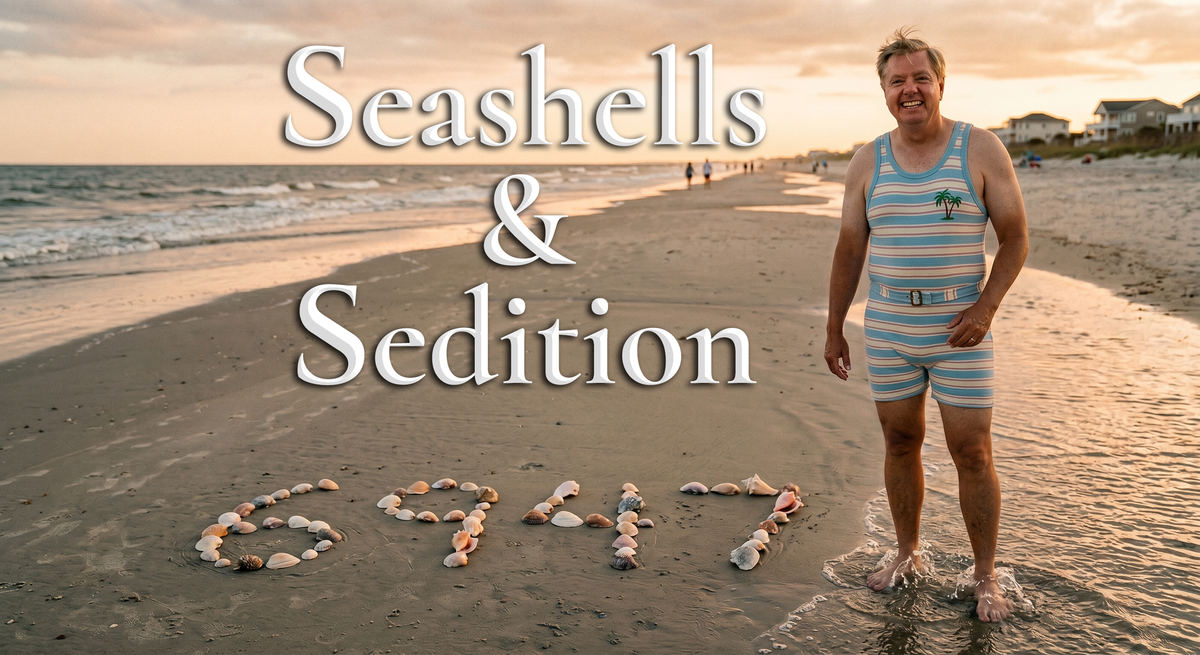
Here is a photograph of Senator Lindsey Graham, the senior senator (and noted gentlewoman) of the great state of South Carolina, standing on a beach somewhere along the Atlantic shoreline of his home state, smiling broadly beside a careful arrangement of seashells that reads "69 47."
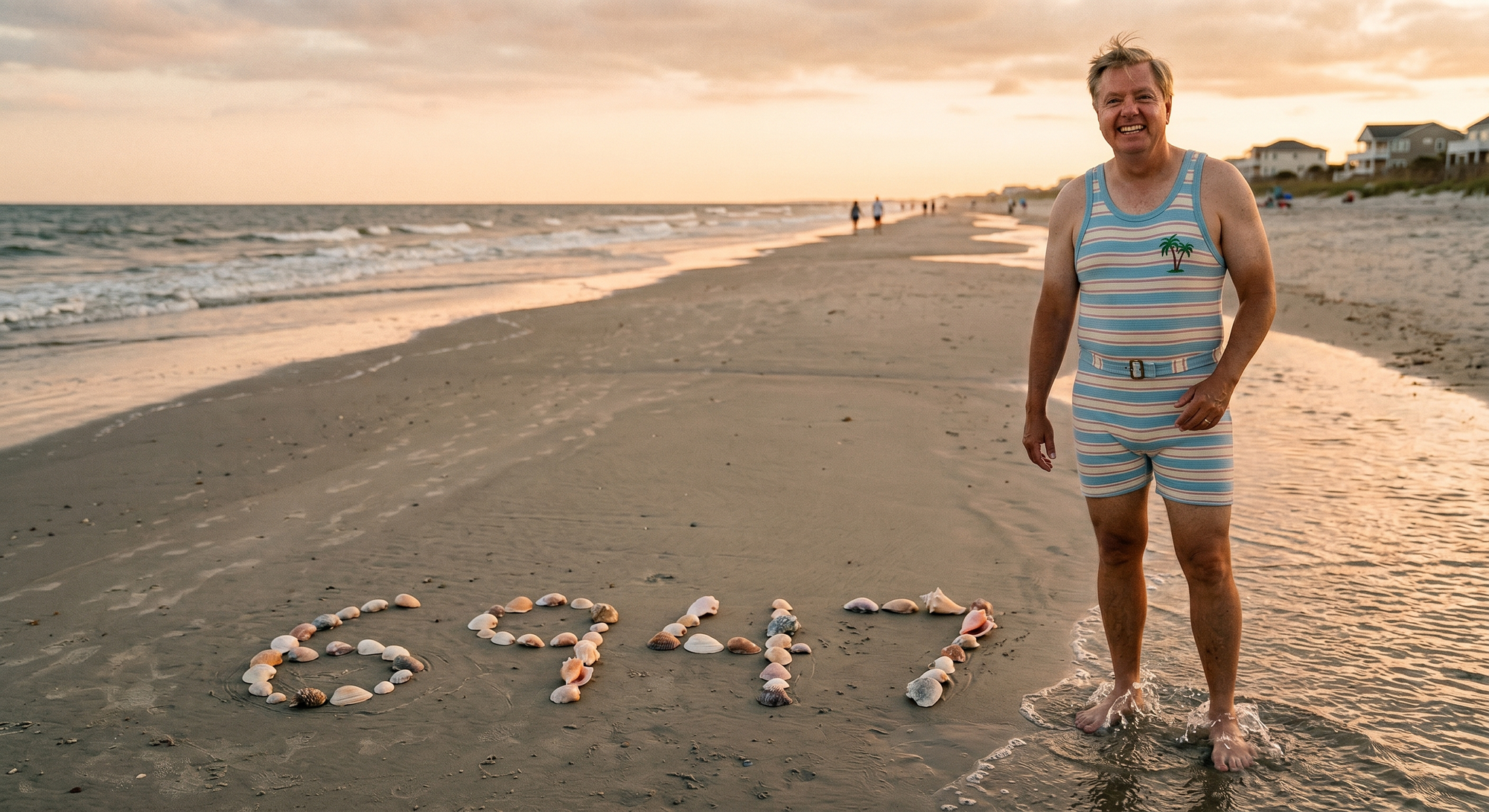
I cannot, of course, speak to what the senator intended by this particular combination of integers. I must assume it's message is political. I didn't realize some folks associate those numbers with anything other than wholesome arithmetic. It certainly never occurred to me that the senator, our most theatrical and most convivial celebrant of beachside iconography, might have selected those two numerals in that order for any reason other than aesthetic pleasure. If he meant something untoward by it, that's on him. Cool shell formation, Linds.
That paragraph, every word of it, every fabricated detail, every unsupported insinuation, every defamatory implication, and the very fake image I have just constructed out of cloth and salt air about a sitting United States Senator on a public beach, is fully protected speech under the First Amendment of the Constitution of the United States. New York Times v. Sullivan. Hustler Magazine v. Falwell. The accumulated weight of more than sixty years of First Amendment jurisprudence stands behind my right to write that paragraph, and your right to read it, without anyone in particular getting fucking indicted over it.
It also stands, not incidentally, behind James Comey's right to post a picture of some seashells on a beach.
If wishing in public for the removal, or even, in a stretched reading, the death, of a sitting president were genuinely a federal crime, our actual jails would not be sufficient to the task. We would need new ones. And we would need to start by clearing some space at the top of the docket for the President himself.
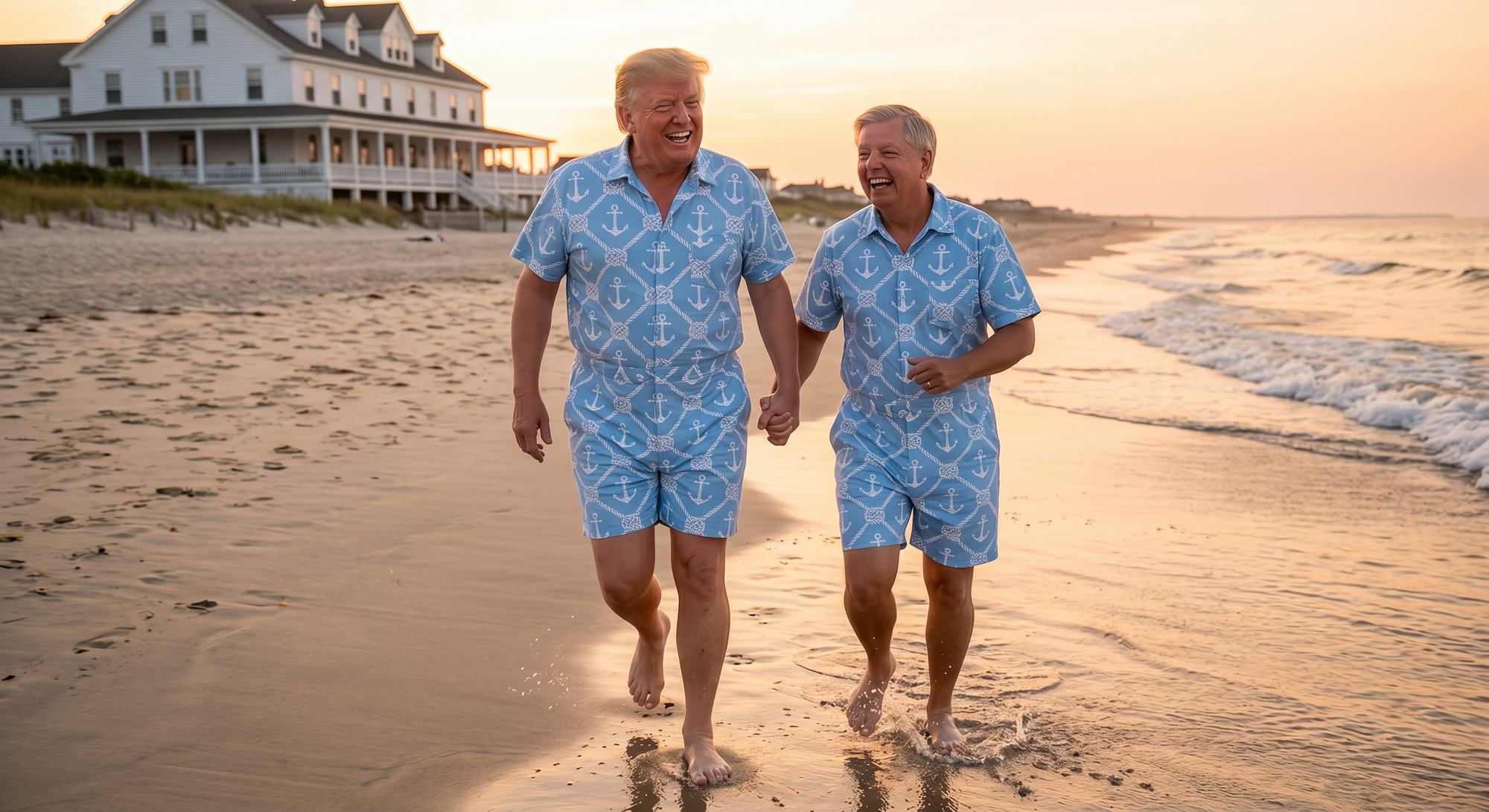
In October 2024, at a rally in Glendale, Arizona, Donald Trump said the following about Liz Cheney: "She's a radical war hawk. Let's put her with a rifle standing there with nine barrels shooting at her, OK? Let's see how she feels about it, you know, when the guns are trained on her face." This was not arranged in seashells. It was said into a microphone in front of a crowd, with cameras running, on the record.
In September 2023, on Truth Social, Trump wrote of General Mark Milley, then the Chairman of the Joint Chiefs of Staff: "This is an act so egregious that, in times gone by, the punishment would have been DEATH!" Milley, a sitting four-star general at the time, told CBS News he had to take steps to bolster security for himself and his family.
In June of 2020, according to Defense Secretary Mark Esper's memoir, Trump asked, of Americans protesting outside the White House: "Can't you just shoot them? Just shoot them in the legs or something?" The month before, he had announced on Twitter that "when the looting starts, the shooting starts." During the 2024 campaign he repeatedly proposed that shoplifters be shot on sight.
The defense will be that all of this is political hyperbole. The kind of vituperative, abusive, inexact language that the Supreme Court in Watts recognized as the natural register of political speech in a free country. And the defense, in each case, would be correct. The President is allowed (though ill advised) to say these things. So is everybody else. So, for that matter, are people who arrange seashells on beaches. Or take pictures of them.
That's what the First Amendment means. That's what it is for. It is unevenly inconvenient, protecting the speech you find vile alongside the speech you find essential, and a system that applies it to one man's hurt feelings while ignoring his own much louder, much more specific words is not a justice system. It is an instrument of injustice.
The good news, such as it is, is that James Comey has Patrick Fitzgerald representing him, a federal judge appointed by George W. Bush hearing the case, and a Supreme Court precedent only three years old that says the government has to prove something it manifestly cannot prove. The case is unlikely to survive a motion to dismiss, and if it does, it is unlikely to survive a jury, and if it does, it is unlikely to survive appeal.
The bad news is that the process, the surrender, the arraignment, the legal bills, the years of life eaten by it, is itself the point. You don't have to win in the courts to make the prosecution work. You just have to bring it.
That, at least, the President understands perfectly.