The Oldest Man on Utah Beach
Against All Odds: The Inspiring Heroism of Theodore Roosevelt Jr. on D-Day
Eighty years ago today, on June 6, 1944, only one general landed with the first wave of troops to brave the beaches of Normandy. Leading the 8th Infantry Regiment and the 70th Tank Battalion at Utah Beach, this general was not a young and exuberant West Point graduate. At fifty-six years old, he was the oldest man in the invasion. Remarkably, he was also the only participant in the Normandy invasion whose son was also on the beaches that day, among the first soldiers to climb from the sea at Omaha Beach.
Despite being slowed by a heart condition and forced to use a cane due to lingering arthritis, the general took charge after discovering that the sea had forced landing craft approximately a mile off course. Walking down the beach with his cane in one hand and his pistol in the other, he reconnoitered the area and determined a plan of attack. Deciding to advance from their current position rather than moving further down the beachhead, he told his men, “We’ll start the war from right here!”
As artillery shells fell around the troops, sending chunks of sand and earth flying, the general stood on the beach and greeted every regiment that landed after his own with a personal welcome. He inspired the scared soldiers with his confidence and made them laugh with stories of his famous father. One soldier later recounted that seeing the general walking around, seemingly indifferent to the chaos and enemy fire whizzing through the air, gave him the courage to do his own duty. “If the general is like that,” the soldier reasoned, “it can’t be that bad.”
By adapting to his position, modifying his division’s original plan, and personally overseeing troop movements, the general enabled his men to achieve their mission objectives by coming ashore and attacking north behind the beach toward their original objective. Years after the war, when Chairman of the Joint Chiefs Of Staff General Omar Bradley was asked to name the single most heroic action he had ever seen in combat, he answered without hesitation, “Ted Roosevelt at Utah Beach.”
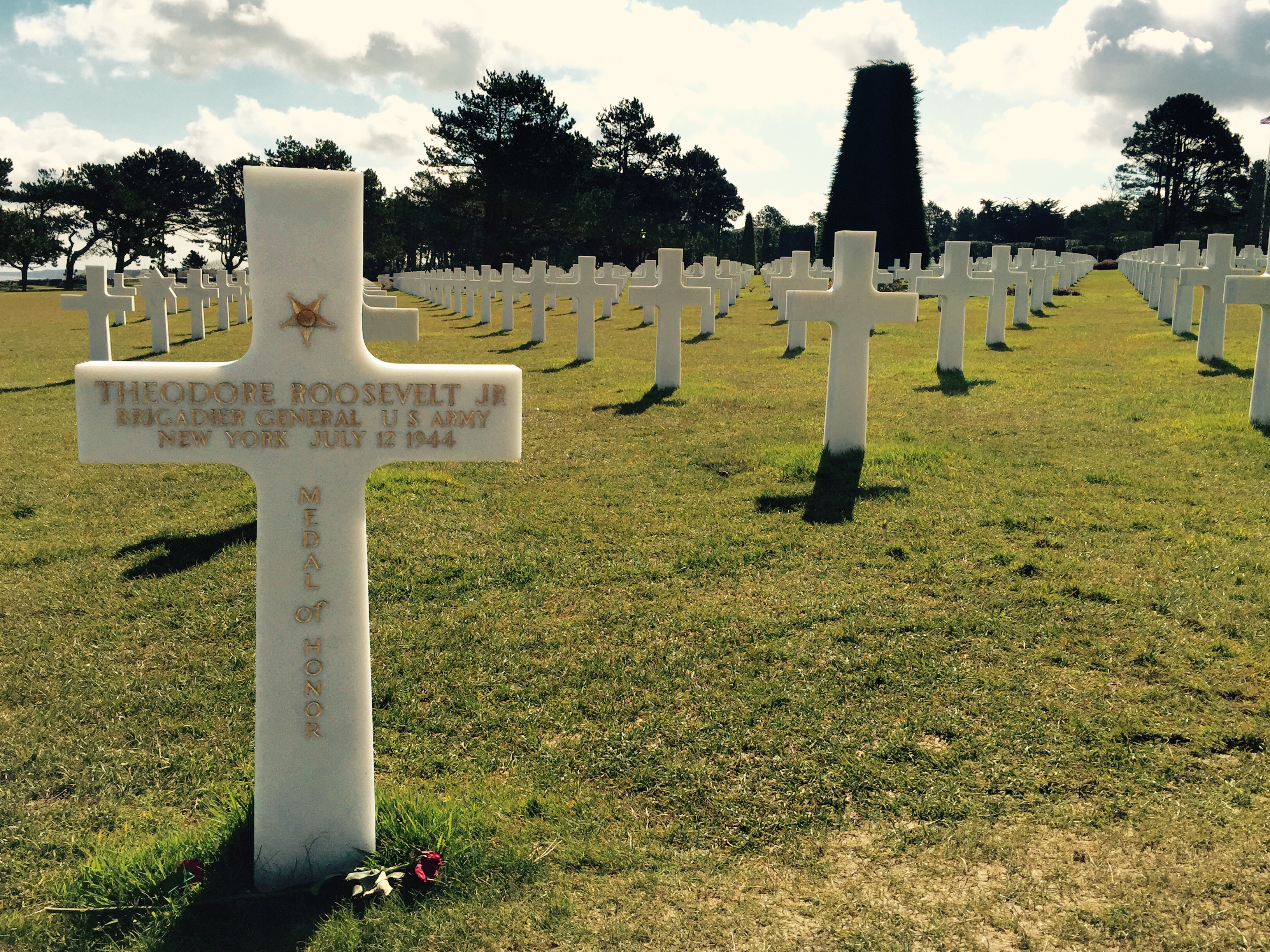
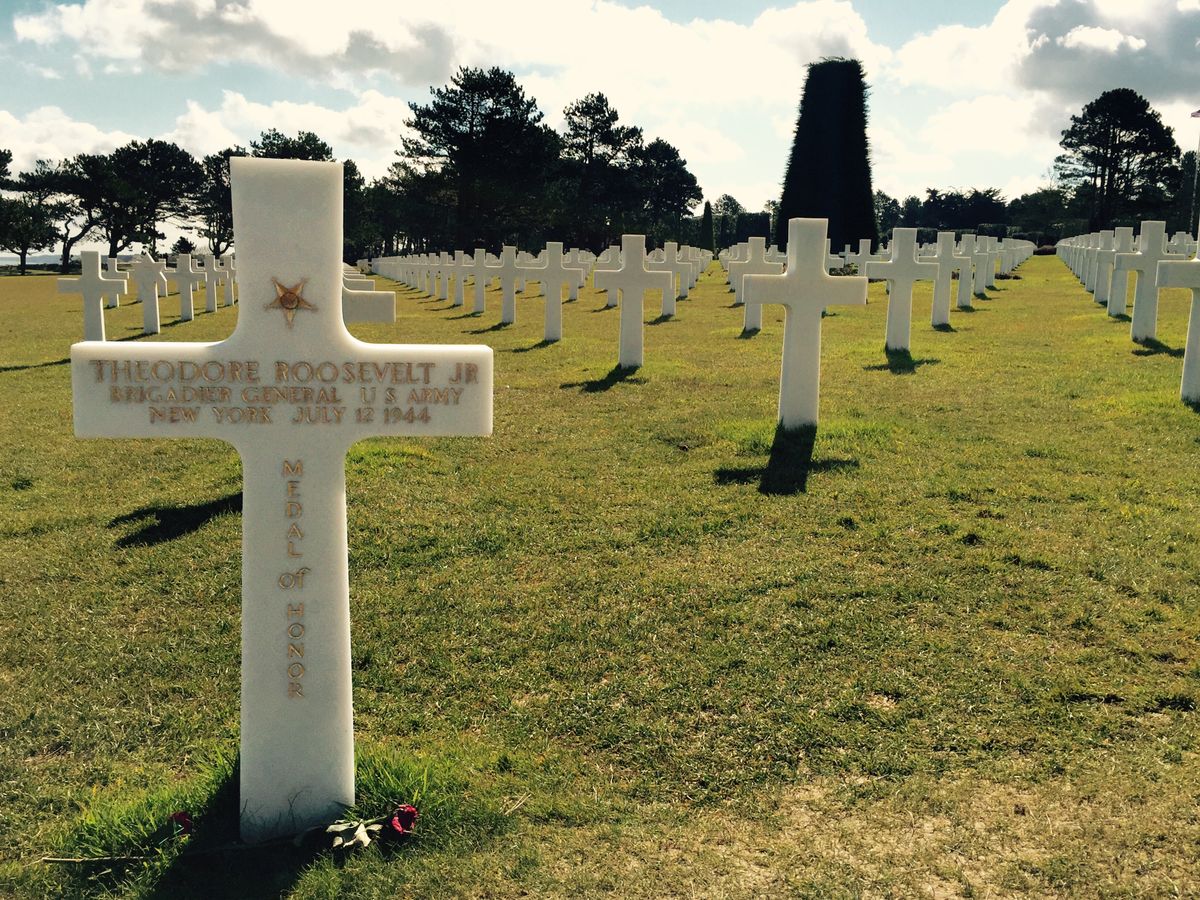
Theodore Roosevelt Junior, son of President Theodore Roosevelt, was recommended for promotion to the two-star rank of Major General in command of the 90th Infantry Division just over a month after his heroic actions at Utah Beach. When Supreme Allied Commander Dwight D. Eisenhower called the following morning to approve the recommendation, he was informed that Roosevelt had passed away overnight. His pallbearers included Generals J. Lawton Collins, Courtney Nick Hodges, Clarence R. Huebner, Raymond O. Barton, Omar N. Bradley, and George S. Patton.
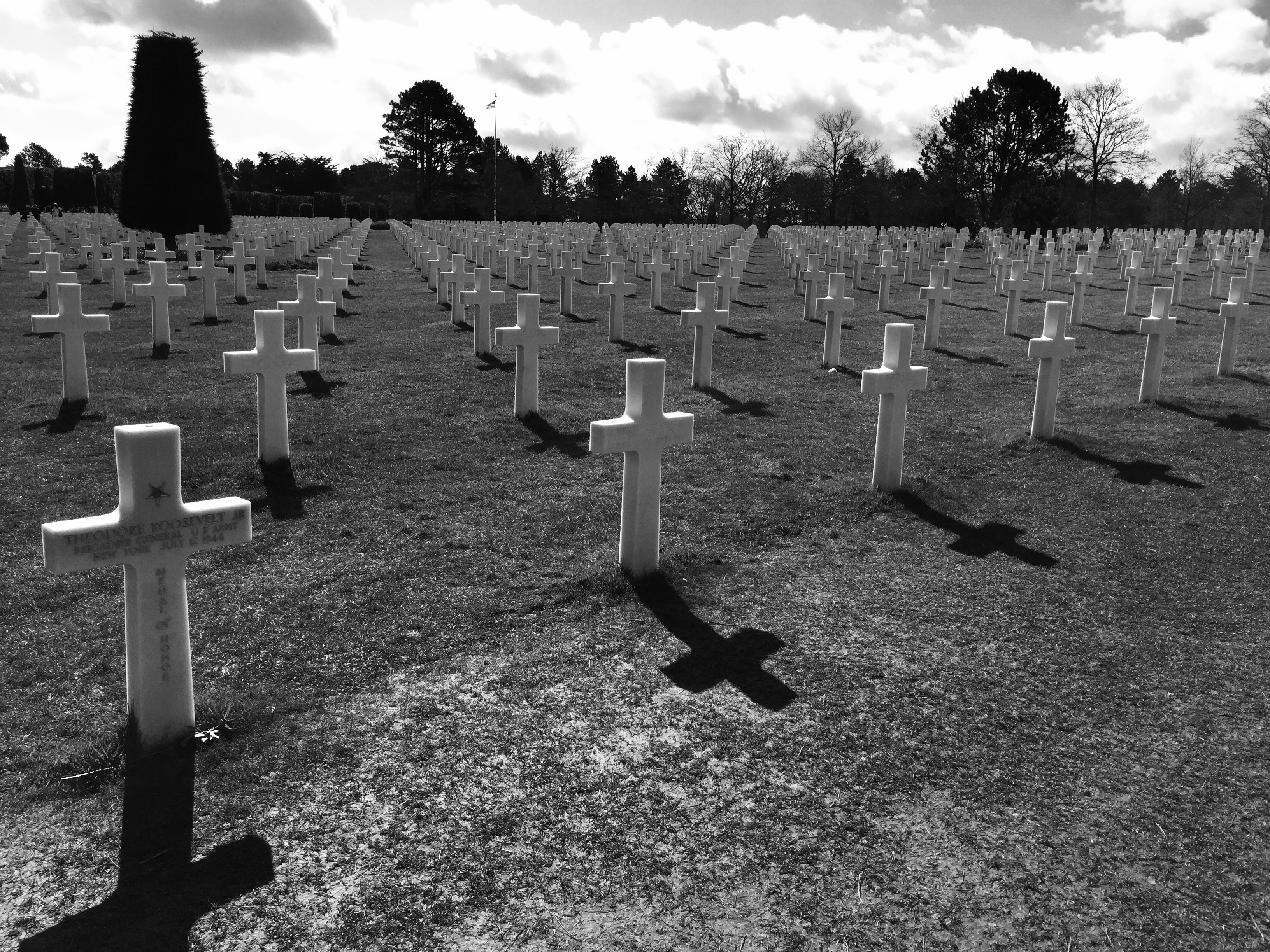
On September 28, 1944, Theodore Roosevelt Jr. was awarded the Medal of Honor. The citation reads:
"For gallantry and intrepidity at the risk of his life above and beyond the call of duty on 6 June 1944, in France. After two verbal requests to accompany the leading assault elements in the Normandy invasion had been denied, Brig. Gen. Roosevelt's written request for this mission was approved and he landed with the first wave of the forces assaulting the enemy-held beaches. He repeatedly led groups from the beach, over the seawall and established them inland. His valor, courage, and presence in the very front of the attack and his complete unconcern at being under heavy fire inspired the troops to heights of enthusiasm and self-sacrifice. Although the enemy had the beach under constant direct fire, Brig. Gen. Roosevelt moved from one locality to another, rallying men around him, directed and personally led them against the enemy. Under his seasoned, precise, calm, and unfaltering leadership, assault troops reduced beach strong points and rapidly moved inland with minimum casualties. He thus contributed substantially to the successful establishment of the beachhead in France."
Theodore Roosevelt Jr.'s legacy is etched in the sands of Utah Beach, a testament to courage and leadership that transcends generations. His unwavering determination and fearless presence on that fateful day not only shaped the course of the invasion but also inspired countless soldiers to rise above their fears and fight for freedom. As we remember the heroic acts of D-Day, let us honor the indomitable spirit of a generation of brave men and a general who, despite physical ailments and the weight of history, stood resolute in the face of danger. His actions remind us that true heroism lies in the relentless pursuit of duty and the unyielding belief that, no matter the odds, we will start the war from right here.